The Odyssey:  A Journey Worth Taking

In a year when much has been made of the 250th anniversary of the Declaration of Independence, another event has gained more traction across the nation about something that is more than 10 times older than that.

People are flocking to movie theatres to see a film adaptation of Homer’s The Odyssey, an ancient Greek epic poem dating back to 2700-2800 B.C. that follows Odysseus, a king who encounters monstrous obstacles in trying to sail home to Ithaca after the Trojan War.

It is doubtful many people even know the meaning of the word “odyssey” yet sold-out screenings are populating across the U.S. since Christopher Nolan’s film opened on July 16th.  No fourth of July fireworks display matches the attention of this movie event.

How strange but exhilarating.  Part of the buzz has to do with how Nolan shot the whole film on IMAX 70mm film stock, the first time that has been done for a feature-length movie.  That non-cinephiles have educated themselves about this format seeking out one of the 25 theatres in the country equipped to show the film in the proper ratio is thrilling.  Suddenly, viewing a film actually running through a projector is fashionable.

“Something old is new again” applies to this feat in other ways as well.

Since Nolan could not shoot dialogue scenes using IMAX cameras due to the noise they made, he and his technical team came up with encasing the camera inside a blimp that dampened the sound, much as filmmakers did when sound pictures came around in the late 1920’s.

Then, the idea of moviegoers leaving their homes to see this film in special theatres echoes what studios did in the 1950’s to extract people away from their TVs to see a widescreen film shot in Cinemascope.

Nolan is one of the most ambitious filmmakers in the past 25 years.  While his epic trilogy of Batman and other big-budget movies garner the headlines, it’s his clever storytelling devices of moving time intervals like pieces across a cinema chessboard that keeps audiences engaged especially in “Memento,” “The Prestige” and “Oppenheimer.”

Nolan’s unbridled passion for loving film—refusing digital cameras, demanding theatres project his products on projectors, insisting that his movies have a longer window of exclusive theatrical exhibition before they appear on streaming services—makes him a champion for the future of movies and exhibition.

I saw “The Odyssey” in an IMAX 70mm presentation and thoroughly enjoyed myself.  For three hours, I was engrossed.   While I wouldn’t declare the film a masterpiece, it is a remarkable achievement, the power of attracting a large audience for something so archaic. For that, fans should give him grace if every product he produces isn’t THE BEST.

Let’s celebrate when these rare spontaneous moments surface reminding us that people when they want to can come together in the dark for three hours to share something special.

These days we crave what little binds us.  Who knew that a piece of literature thousands of years old would capture such enthusiasm, a sign that better days are on the horizon.  Just like Odysseus, we just have to sail through some nightmares first.
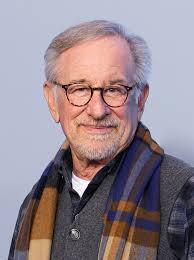
Listen: Spielberg Still Has Something to Say

Spielberg’s latest film “Disclosure Day” is his best work in years. Though not without minor flaws, the film’s ambitious camera work and heartfelt message of empathy are remarkable—especially as Spielberg approaches 80.

I’ve been lucky to have lived during his lifetime, allowing me to see all but three—“Empire of the Sun,” “Always” and “The Terminal”—of his 35 feature films on the big screen when they were first released.

I feel a special connection to Spielberg in this regard:  we’re both Jewish and made Super-8 movies as teenagers, aspiring to become filmmakers.  Of course, that’s where the similarities end.

His off-the-charts talent of connecting with audiences with his ideas of what makes us human is why he is the best director of his generation, not to mention the highest-grossing one surpassing $10 billion.

He’s created many of the iconic movie moments of the past half-century.

“Jaws” (1975):  When the giant shark catapults out of the water onto the boat surprising the men during the climax.

“Raiders of the Lost Ark” (1981): The opening sequence when the enormous boulder is about to crush Indiana Jones.

“E.T. the Extra-Terrestrial” (1982):  When E.T. says goodbye to Elliott.

“Jurassic Park” (1993):  The sighting of a T-Rex in the side view mirror of a jeep.

“Schindler’s List” (1993):  When the prisoners he saved present Schindler with a gold ring fashioned from their teeth, and he replies, “I didn’t do enough.”  Also, the last scene of the real people Schindler saved placing stones upon his grave.

“Saving Private Ryan” (1998):  The disturbing violence when the film starts of soldiers arriving at Omaha Beach on D-Day.

“Munich” (2005):  The telephone assassination scene in Rome.

“War Horse (2011):  The climatic scene when Albert unable to see reunites with his horse Joey by whistling for him.

“West Side Story” (2021):  The exhilarating “America” dance number performed outside on the streets.

Spielberg is driven by his desire to captivate an audience’s attention. He perceives the shared experience of strangers watching movies together in a dimly lit theater as a quasi-religious ritual.  The shared reactions to images on the screen unite people in ways that few other art forms can. The power of movie-watching or screen-watching, realized in a global way near the end of “Disclosure Day,” is thrilling and life-affirming.  I have often felt this same way, that if only everybody was to watch a particular film at the same time, life would be better. 

During the Cold War, when tensions between the U.S. and U.S.S.R. were high, I had a naive thought:  what if Nixon and Brezhnev could sit together in a movie theater and watch “It’s a Wonderful Life”?  Imagine them moved to tears, grasping the shared humanity they both possess, leading to the de-escalation of nuclear arms.

“Disclosure Day” is a relentless, one-long chase with no opening credits, a roller coaster ride that never seems to end. Spielberg’s camera moves in magical ways, constantly seeking to astonish. One scene was so intense that I experienced an out-of-body sensation, realizing my rapid breathing and how tightly I was gripping the armrests as my eyes froze open at the engrossing images.

But Spielberg’s use of camerawork and editing is his technical side.   To match that dexterity with emotional scenes that connect the audience to their naked emotions is what stays with an audience after the lights come up.

Seeing “Disclosure Day” is a rare pleasure achieved by very few directors.  Spielberg urgently beseeches us to see the awe-inspiring potential in movies and in ourselves.  I can’t wait to experience his 36th feature.

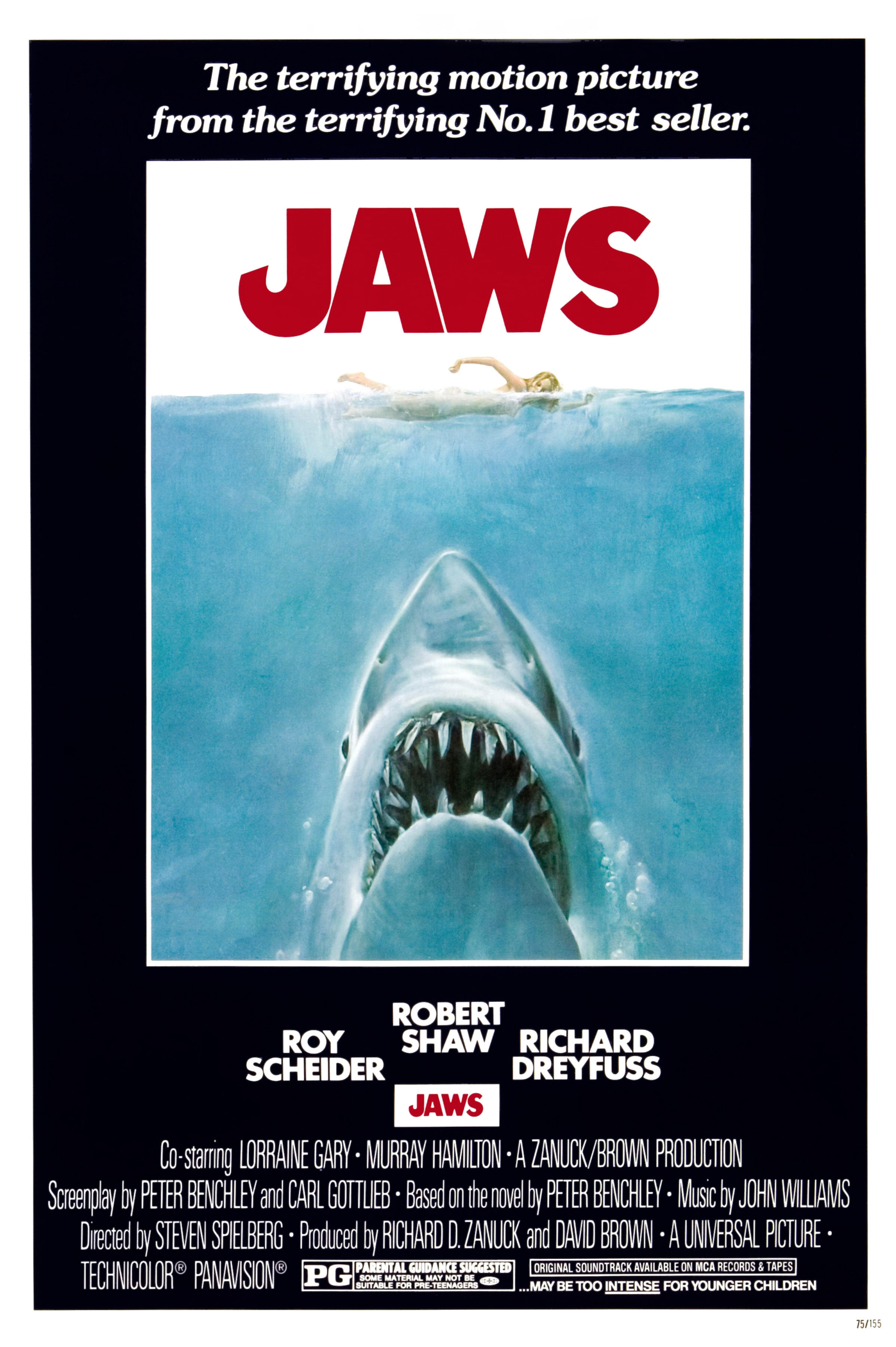
Fifty years later, “Jaws” still bites

It’s hard to believe that half a century has passed since “Jaws” was released in July of 1975.  I was in Palm Springs with my family when we went to see it at the Plaza theatre.  I took the paperback of the Peter Benchley novel with me so that I could finish it in our motel room before seeing the movie.  It remains one of the most memorable film experiences I’ve ever had.

Earlier this month I watched “Jaws” for the first time in many years along with my 21-year-old son who had never seen it.

In order to temper unrealistic expectations on his part regarding a 50-year-old film, I explained to him that “Jaws” was made 20 years before CGI came on to the scene.  Spielberg was one of the first directors to use CGI for 1994’s “Jurassic Park.”  Even then, he insisted on using practical effects with the dinosaurs and not rely solely on computers.

Smartly, Spielberg reveals little of the shark until the climax.  When it is finally shown as it breaches onto the boat swallowing Shaw’s Quint, the use of a mechanical puppet is frightening since he is actually interacting with a real object and not reacting to nothing but a green screen.My son came away impressed.

What elevates “Jaws” from other excellent movies is the impact its success had on the movie industry.

The summer blockbuster.  Before “Jaws,” studios did not release their best pictures during the summer due to many theatres not having air-conditioning.  Once “Jaws” opened to packed theatres, it became clear that people would stand in line for an “event” film no matter the weather.  “Jaws” earned $260 million domestically in its initial release.  Two years later, “Star Wars” would open Memorial Day weekend and surpass that mark, earning over $300 million.  Thus, the summer blockbuster was born.

Wide release.  Eschewing the common exhibition practice of opening a film in a small number of theatres, gradually expanding over several weeks, “Jaws” opened in over 400 theatres.  This greatly boosted its earnings at a faster clip (this was before multiplexes became commonplace).

Trailers on TV.  It was uncommon to advertise new movies on television.  Universal Studios aired commercials a few days before the release of “Jaws” thus generating high interest. 

Just as Alfred Hitchcock’s 1960 “Psycho” made people afraid to take showers, “Jaws” made people fearful of swimming in the ocean.

Additionally, “Jaws” catapulted the careers of Steven Spielberg, John Williams (who would go on and score the bulk of Spielberg’s canon), Roy Scheider, and Richard Dreyfuss.  Before “Jaws,” Robert Shaw had established himself as an in-demand character actor for a quarter of a century which explains why his name had the highest position in the credits.  Sadly, his career would be cut short, dying three years later at age 51from a heart attack.

Making “Jaws” took longer and cost more than expected.   Since much of the film was shot in Martha’s Vineyard off the coast of Massachusetts, the sea water damaged the 25-foot mechanical shark that was the film’s main prop leading to numerous delays.

The original 55 days of shooting tripled to 159, while the $3.5 million budget ballooned to $12 million.  A new documentary on the making of the movie depicts the stress that Spielberg was under, especially when hearing that studio bosses were thinking of shutting down the production.

Once filming finished, Spielberg had a full-blown panic attack.  He thought he would never work in Hollywood again.

Spielberg revealed that it took him years to overcome this anxiety, often having nightmares even after achieving great success.  To overcome his trauma, he would secretly board the Orca boat, part of the “Jaws” stop on the Universal Hollywood Studios tour, and lay down in the cabin to calm himself.

I Love Desi

I just read the new book, Desi Arnaz:  The Man Who Invented Television by Todd S. Purdum, and came away with a higher appreciation for Arnaz, who some pejoratively referred to as Mr. Lucille Ball.

Arnaz was the mastermind behind “I Love Lucy” and Desilu Studios.  He’s responsible for moving television production from the east coast to the west in the 1950s, establishing situational comedies shot on film in front of a live audience, and conceiving of re-runs, the concept that networks could earn money by airing repeat viewings instead of paying for summer replacement shows.

“I Love Lucy” was created to keep the Arnazes together after 10 years of marriage which included long periods of separation due to Desi’s orchestra being on the road.

In 1950, Lucille Ball had a popular radio show, “My Favorite Husband.”  When TV executives sought new series to develop, they harvested radio shows to make the transition.

What resulted was “I Love Lucy” which only happened after CBS and their sponsor Philip Morris agreed to their demands: that Desi replace actor Richard Denning as Lucy’s husband, and that the show be produced in Los Angeles where they had their home.

At the time, most TV shows were produced in New York and nearly all were aired live on the east coast with movie cameras capturing the shows off television monitors in order to air them in other time zones.  Called kinescopes, these were of inferior quality compared to a show produced directly using motion picture cameras (videotape didn’t exist yet).

Reluctantly, the network agreed to all their terms including having the show filmed in front of a live audience with a revolutionary three-camera concept.  Famed cinematographer Karl Freund figured how to properly light the set for both long and close-up shots as all cameras simultaneously captured the action.  By having the show filmed allowed for high quality repeats to air.

When “I Love Lucy” premiered on Oct. 15, 1951, it quickly rose to become the number one rated show in America for four of its six seasons.

Near the end of the 1950’s, Desilu was producing more shows for television than any other studio.

He was the first Latino to head a major studio, Desilu, which at one time had more programming on television than any other studio.  In fact, to this day, no other Latino has held such a powerful position in Hollywood.

Unfortunately, such success led to Desi spending long hours at the studio, leaving his wife and children alone.   It’s ironic that the show was created to ensure they had more time for themselves, but instead the opposite happened which ultimately led the couple to divorce in 1960 after 20 years of marriage.

Sadly, Desi Arnaz never received an Emmy nomination for his performance (Lucille Ball earned two Emmys for the show).

Lucille Ball was Arnaz’s strongest supporter of what he accomplished as a studio mogul.  She’d always give him credit for creating the show and running Desilu successfully while so many in the Hollywood community didn’t.

Once they went on with their separate lives, they remained close.  He would continue producing her TV program “The Lucy Show” and near the end of his life, Ball visited him at his house in Del Mar.  According to daughter Lucie Arnaz, the last phone call they had with one another occurred on their wedding anniversary, Nov 30, 1986, with each one repeating “I love you” to the other.  Two days later, Arnaz passed away.

When Ball received the Kennedy Centers honors five days later, actor Robert Stack, star of the Desilu-produced “The Untouchables,” read a note from Desi which ended:  “I Love Lucy was never just a title.”

Memories by John Williams

As a teenager, the section of any record store where I spent the majority of time browsing was the film soundtracks.  Most of my albums were scores by my favorite composers:  Bernard Herrman, Jerry Goldsmith, Danny Elfman, and John Williams.

At that time, one could not see a film again unless it was shown on television or re-released in movie theaters.  So, I’d play an album on my record player and allow the music to wash over me as I reclined on my bed staring up at the blank ceiling, letting the musical leitmotivs conjure up specific scenes from the film.

This month, a new documentary premiered, “Music by John Williams,” chronicling the maestro’s life story.  Its subtitle could be “With Collaboration by Steven Spielberg” because in nearly all of his 34 films, the film director has worked with Williams.

It is an unprecedented nearly half a century of work that began in 1975 with “Jaws” and was last renewed in 2022 with “The Fabelmans.”  When they first worked together, Spielberg was 29 and Williams 43.

During this second half of his life, Williams found a second career as a conductor, first as the principal conductor with the Boston Pops Orchestra for 14 years, then as a guest conductor with orchestras around the world (he’ll head the Berlin Philharmonic in June 2025).

Try to imagine any of these movies without hearing in your head their musical themes:  “Jaws,” “Star Wars,” “Close Encounters of the Third Kind,” “Superman,” “Raiders of the Lost Ark,” “E.T.,” “Jurassic Park,” “Schindler’s List,” or “Harry Potter and the Sorcerer’s Stone.”

Every time a person sees a film released by Universal, one also hears the fanfare music by Williams.  That goes for the Olympics and NBC News.  And to think he began this body of work in his mid-40’s.  Little did he know his life was only at its mid-point.

His most stirring pieces can rouse one’s spirits:  Superman flying through the sky, the Jedi fighters diving deep into the Death Star, Indiana Jones dashing away from danger onto a plane, the boys’ bicycling across the moon.  His most quiet passages can bring tears:  Elliot saying goodbye to E.T., Schindler at a loss upon receiving a gold watch from the Jewish people whose lives he saved.

Despite technological advances in devices that could write the notes for him on a scoresheet, he adheres to his laborious habit of writing down each note by hand.  And, with few exceptions, chooses not to employ electronic instruments because, as he says, you can’t hear a musician’s soul through a synthesizer.

Of course, there are scores of films Williams worked on that aren’t memorable.  There are critics who view his work as derivative and schmaltzy.  But there’s no denying that some of his compositions will never be forgotten.

John Williams and Steven Spielberg.