
Spielberg’s latest film “Disclosure Day” is his best work in years. Though not without minor flaws, the film’s ambitious camera work and heartfelt message of empathy are remarkable—especially as Spielberg approaches 80.
I’ve been lucky to have lived during his lifetime, allowing me to see all but three—“Empire of the Sun,” “Always” and “The Terminal”—of his 35 feature films on the big screen when they were first released.
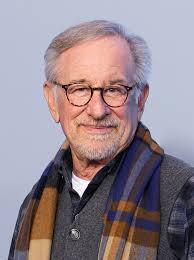
I feel a special connection to Spielberg in this regard: we’re both Jewish and made Super-8 movies as teenagers, aspiring to become filmmakers. Of course, that’s where the similarities end.
His off-the-charts talent of connecting with audiences with his ideas of what makes us human is why he is the best director of his generation, not to mention the highest-grossing one surpassing $10 billion.
He’s created many of the iconic movie moments of the past half-century.
“Jaws” (1975): When the giant shark catapults out of the water onto the boat surprising the men during the climax.
“Raiders of the Lost Ark” (1981): The opening sequence when the enormous boulder is about to crush Indiana Jones.
“E.T. the Extra-Terrestrial” (1982): When E.T. says goodbye to Elliott.
“Jurassic Park” (1993): The sighting of a T-Rex in the side view mirror of a jeep.
“Schindler’s List” (1993): When the prisoners he saved present Schindler with a gold ring fashioned from their teeth, and he replies, “I didn’t do enough.” Also, the last scene of the real people Schindler saved placing stones upon his grave.
“Saving Private Ryan” (1998): The disturbing violence when the film starts of soldiers arriving at Omaha Beach on D-Day.
“Munich” (2005): The telephone assassination scene in Rome.
“War Horse (2011): The climatic scene when Albert unable to see reunites with his horse Joey by whistling for him.
“West Side Story” (2021): The exhilarating “America” dance number performed outside on the streets.
Spielberg is driven by his desire to captivate an audience’s attention. He perceives the shared experience of strangers watching movies together in a dimly lit theater as a quasi-religious ritual. The shared reactions to images on the screen unite people in ways that few other art forms can. The power of movie-watching or screen-watching, realized in a global way near the end of “Disclosure Day,” is thrilling and life-affirming. I have often felt this same way, that if only everybody was to watch a particular film at the same time, life would be better.
During the Cold War, when tensions between the U.S. and U.S.S.R. were high, I had a naive thought: what if Nixon and Brezhnev could sit together in a movie theater and watch “It’s a Wonderful Life”? Imagine them moved to tears, grasping the shared humanity they both possess, leading to the de-escalation of nuclear arms.
“Disclosure Day” is a relentless, one-long chase with no opening credits, a roller coaster ride that never seems to end. Spielberg’s camera moves in magical ways, constantly seeking to astonish. One scene was so intense that I experienced an out-of-body sensation, realizing my rapid breathing and how tightly I was gripping the armrests as my eyes froze open at the engrossing images.
But Spielberg’s use of camerawork and editing is his technical side. To match that dexterity with emotional scenes that connect the audience to their naked emotions is what stays with an audience after the lights come up.
Seeing “Disclosure Day” is a rare pleasure achieved by very few directors. Spielberg urgently beseeches us to see the awe-inspiring potential in movies and in ourselves. I can’t wait to experience his 36th feature.

