“The Christmas Song” – A Holiday Chestnut

How “The Christmas Song (Chestnuts Roasting on an Open Fire)” originated sounds like a piece of fiction.  A songwriter uncomfortable in the hot summer of Los Angeles decides to write a song about cold things as a way to cool off.  

Yet that is exactly what inspired Bob Wells in 1945 when collaborator Mel Tormé (whose original last name was Torma born of Russian-Jewish immigrants) arrived at his parents’ home in Toluca Lake, an upscale celebrity-inhabited community a short distance from downtown L.A.

When Tormé entered the house, he discovered a 25-word poem (curiously the same number of calendar days leading up to Christmas’s December date) on a writing pad which what turned out to be the opening lines to the song:

Chestnuts roasting on an open fire

            Jack Frost nipping at your nose

            Yuletide carols being sung by a choir

            And folks dressed up like Eskimos

Mel Tormé continues the story in his autobiography It Wasn’t All Velvet:

I took another look at his handiwork.  “You know,” I said, “this just might make a song.”

We sat down together at the piano, and improbably though it may sound, “The Christmas Song” was completed about forty-five minutes later. 

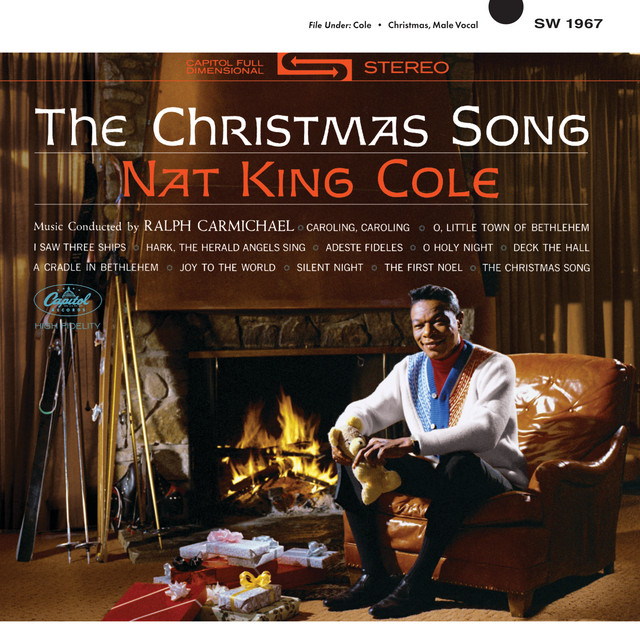
It wasn’t as quickly recorded though, taking a year before Nat King Cole sang it.

It’s funny how both “White Christmas” and “The Christmas Song” are linked to warm weather in Los Angeles.   In Berlin’s verse he talks about palm trees swaying in L.A., and for Wells, it was a 100-degree July day that prompted him to dream of the winter with all its Christmas trappings.

Like a top ten list, the marvel of the song is how it encapsulates so many of the marvelous images and memories people envision about the holiday. 

This classic begins with vivid descriptions of what Christmas is all about:  “chestnuts roasting on an open fire”—burning wood in the fireplace, “Jack Frost nipping on your nose”—cold weather, “yuletide carols being sung by a choir”—angelic Christmas music, and “folks dressed up like Eskimos”—warm winter clothing.  Throw in a turkey, mistletoe, Santa, toys, flying reindeer, and the words “Merry Christmas” and the result is an amazing array of big ideas in a small number of lines that strike an emotional core.

Cole recorded the song four times, the first two recordings occurring within two months of one another. 

In 1946, Nat King Cole was known primarily as a jazz pianist as part of the King Cole Trio.   While he did sing on the records, his vocals were viewed as secondary to his piano playing.

After hearing Wells and Tormé’s song, Cole felt that strings should supplement the recording.

            His widow Maria Cole recalled in her book about her husband how he first regarded the song.  “This is a very pretty song but it’s no good for a trio.”  It needs “a full band for a big background . . . a different kind of instrumentation.” (Cole 52)

            According to Maria, it was Cole’s manager Carlos Gastel (who also had Mel Tormé as a client) who suggested “adding a string section” foreseeing “a new trend for [Cole].”

However, the Capitol Records executives did not see the value of adding to the expense a string arrangement to what they perceived as an intimate jazz trio styling even though Cole had been their biggest recording artist for the past three years.

And so Nat recorded the song just with his trio on June 14, 1946 in New York City at WMCA Radio Studios with a bit of “Jingle Bells” strummed on an electric guitar at the tune’s conclusion.      

Once the record company executives heard it, they agreed to add four string musicians and a harpist and the song was completely redone.  Cole went back into the studio two months later on August 19, 1946 to re-record it at the same location.

What is intriguing about both 1946 recordings is that Cole misreads the line “to see if reindeer really know how to fly” as “to see if reindeers really know how to fly” adding a grammatically incorrect ‘s’.   No one evidently pointed this out to him in the intervening eight weeks between the June and August recording sessions.

Cole finally fixed this error in the successive two recordings.

The third rendering had a lush orchestral arrangement by Nelson Riddle, Frank Sinatra’s top arranger, and was made on August 24, 1953 at Capitol Studios in Hollywood, famously referred to as “The House That Nat Built” due to the amount of money the singer made for the record label. Though rarely heard anymore, music aficionados view this as the best version of the four since Cole’s voice had shown signs of deterioration in the fourth and final recording nearly eight years later.

Arranged by Charles Grean and Pete Rugolo, and conducted by Ralph Carmichael, this March 30, 1961 session at New York City’s Capitol Studios is the only stereo recording Cole did of the song which explains why it has supplanted all previous versions, evolving as the one that everyone hears. 

While Cole performed piano duties on the 1946 recordings, Buddy Cole (no relation) and Ernie Hayes played the piano on the 1953 and 1961 versions, respectively.

            The only reason why “The Christmas Song” was not a number one hit was because at the same time of its release the King Cole Trio’s “I Love You for Sentimental Reasons” was at the top of the charts.

            “The Christmas Song” transformed Nat King Cole from a talented jazz artist who sang and played piano in a trio, to a popular singer along the lines of Bing Crosby and Frank Sinatra, a master balladeer, an amazing achievement for an African American entertainer at this time. With “The Christmas Song,” the public and the Capitol Records producers heard a different type of singer.   From now on, Cole focused his musical skills away from the piano and in front of the orchestra.

As Epstein sums up in his biography of Cole, “For almost a quarter of a century his art had been the art of the ensemble jazz musician.  Now he was becoming . . . a lyric soloist.” (158)  By 1948, the King Cole Trio as an artistic entity was no more.

Freddy Cole remembers that his older brother “loved the song” and loved to sing it the rest of his days.

Tormé and Wells would eventually go their separate ways enjoying success in the entertainment industry, Tormé donning several creative musical hats most notably as a preeminent jazz stylist, and Wells as a multiple Emmy-winning television producer.

Even though Mel Tormé wrote additional holiday tunes including “The Christmas Feeling” and “Christmas Was Made for Children,” he and Wells never did write a song as popular as they did in 1946.  In fact, he often referred to the money earned from the composition as his “financial pleasure.”

The Wall Street Journal’s drama critic Terry Teachout describes “The Christmas Song” as “one of the most harmonically complex songs ever to become a hit.”  Still, if it weren’t for Christmas songs of the past airing on radio and in stores each holiday season, few people under the age of 50 would know who Mel Tormé or Bing Crosby were.  It is a shame how artists who were once extremely popular over the course of decades can quickly vanish from public awareness.

To further illustrate this, Daisy Tormé, one of Mel’s five children, related a story about her father who was at the storied Farmer’s Market shopping center near Hollywood when carolers strolled by singing “The Christmas Song.”  After joining the singers in finishing the song, one of them told him that he “wasn’t that bad of a singer.”  When Tormé half-mockingly said that he had recorded a few records in his time, the young man asked, “how many?”  “Ninety,” he responded.

One of the main reasons why the song resonates so deeply is the line “and so I’m offering this simple phrase to kids from one to ninety-two,” an unusual use of first person point of view where the songwriter directly addresses the listener.  

Daisy wistfully reveals that “every time I hear the song, I get emotional because it is like getting a hug from my father.”

            “The Christmas Song” had a career-lasting impact on all three men.   This was the biggest hit Nat King Cole, Mel Tormé, and Bob Wells ever had, and it is safe to say that without that song, just as with “White Christmas” and Bing Crosby, the legacy of these men in the 21st century would be diminished if not entirely forgotten.

Dodger Dynasty

Yoshinobu Yamamoto mobbed by his teammates after the Dodgers won the 2025 World Series.

It has been a few weeks since the Los Angeles Dodgers won the World Series against the Toronto Blue Jays.  Let’s examine why the Dodgers have been the best baseball club for the past 13 years.

The last team to win back-to-back titles was the New York Yankees in 2000.  Since that time, Major League Baseball (MLB) in 2020 added a Wild Card Series replacing the single-game round with a best two out of three series, meaning that some teams would need 13 instead of 11 victories to become champions, thus raising the difficulty of winning a title. The Dodgers did this twice in 2020 and 2025.

Additionally, except for the first Wild Card round, the Dodgers did not have home field advantage against the Phillies, Brewers or the Blue Jays.  Still, the Dodgers had a better road record, 7-1, than home record, 6-3.  The Blue Jays were 5-5 at home throughout the playoffs so when they were up three games to two against the Dodgers, with Games 6 and 7 in Toronto, they statistically had a disadvantage based on how well the Dodgers were playing on the road.  Also, in past World Series that have gone seven games with the home team having a three to two advantage, the road team has won the final two games 14 of the 22 times.

While Toronto had more hits and runs and home field advantage, when it came to crunch time, the Dodgers made the plays when it counted the most. 

Just look at what happened in the final two games.

Game 6

In the bottom of the 9th inning with the Dodgers leading 3-1and no outs, starting pitcher Tyler Glasnow entered the game.  His first pitch to Ernie Clement was a popout to Freddie Freeman.   Andres Jimenez on the second pitch drove a ball to left field.  The Blue Jays’ runners thought it might fall in for a hit so once the ball was caught, Addison Barger had to dive back to 2nd base.  Kike Hernandez sprinted up, caught the ball and without stopping threw it to Miguel Rojas for a game-ending double play.

Game 7

After Miguel Rojas homered in the top of the 9th inning, the Blue Jays threatened in the bottom of the frame.  Yoshinobu Yamamoto, who threw 96 pitches the night before, came in to relive Blake Snell.  With the bases loaded and one out, Dalton Varsho grounded to Rojas who threw to home getting the runner out at the plate.  The next batter drove the ball to the warning track with centerfielder Andy Pages leaping on top of left fielder Hernandez to make the catch and send the game into extra innings.

After Will Smith homered in the top of the 11th, the Blue Jays had men on 1st and 3rd with one out, but Alejandro Kirk hit into a game-ending, series-ending double play.

Incredibly, both Games 6 and 7 ended abruptly via double plays.  Bottom line:  the best team won.

Yamamoto was awarded the World Series MVP.  What did he do?  Pitched a complete game, then threw 130 pitches in two consecutive days.

As Joe Davis aptly worded it after the final out, “To beat the champ, you gotta knock him out!”  And the Jays failed at doing just that. 

That’s why this year’s championship is more impressive than last year’s.

No doubt about it:  the Dodgers are a dynasty. 

Also, no doubt about it, Dave Roberts is the winningest manager in Dodger history.

Since taking over managerial duties in 2016, Roberts has a .621 winning percentage meaning that the Dodgers have won at least 6 out of every 10 games over the past 10 years.  That’s the highest all-time for managers with a minimum of 1,000 games.

The two most revered managers before Roberts, Walter Alston (23 years) and Tommy Lasorda (21 years) had winning percentages of .558 and .526, respectively.

Alston had four championships, Lasorda two and Roberts now has three.

This is also the first time in its 142-year history that the Dodgers have won back-to-back World Series championships.  They now have nine total:  1955, 1959, 1963, 1965, 1981, 1988, 2020, 2024, 2025.  Of course, they should have won another in 2017 when the Houston Astros were cheating.

Once the Guggenheim financial company bought the team in the middle of the 2012 season, they immediately laid the groundwork that has led to the Dodgers making the playoffs every year since 2013.

From 2013 to 2025:

  • They have won the National League Division title 12 out of 13 years.
  • They have won the pennant five times:  2017, 2018, 2020, 2024, 2025.
  • They have played in five World Series, winning three:  2020, 2024, 2025.

This is the most fertile period the Dodgers have ever had.   The Dodgers had an earlier golden period, playing in 10 World Series in 20 years from 1947 to 1966, winning 4 championships in 1955, 1959, 1963 and 1965.  This current team has an opportunity to surpass this achievement in a shorter time span.

They not only have the best player in baseball on their team, Shohei Ohtani, but may be the best player ever to play the game.

Ringling Bros. and Barnum and Bailey circus called themselves “The Greatest Show on Earth.” But after watching Los Angeles Dodger Shohei Ohtani’s performance in Game Four of the National League Championship series, he is truly the Greatest Sho.

On the mound, Ohtani pitched six scoreless innings, striking out 10 Brewers.  At the plate, he hit three homers, one that sailed 469 feet out of the stadium, a feat done only by a few other players at Dodger Stadium (built in 1962).

Not even Babe Ruth, the only other two-way player, did what he did.

That he did all of this in a pennant-clinching game was even more remarkable.  And he did it on Oct. 17, the number that’s on his jersey.

When asked after the game about his historic performance, he expressed frustration that he was unable to finish pitching the seventh inning.  In other words, the greatest performance in the playoffs of all time by a baseball player was still not satisfying for Ohtani.  He expected better.

After he won the MVP for Championship series, the very next day he had an engraved sign attached to his award placed in the middle of the locker room for all teammates to see:  it read “Team Effort.”

Match that modesty with his polite demeanor and you truly have a one-of-a-kind athlete.  Notice the way he greets the opposing dugout, catcher and umpire before his first at-bat.  And how he yells out if his foul ball came close to hitting anyone.

When Shohei Ohtani became a free agent after the 2023 season to sign what was then a record-breaking $700 million contract for 10 years, he told the Dodgers to defer all but $2 million in annual salary, freeing up funds for the management to pursue other quality players, ensuring that the Dodgers would remain competitive in the future.  Very few athletes would have offered such a financial sacrifice, showing that Ohtani puts “team” over himself.

Ohtani won his fourth MVP award (2021, 2023, 2024, 2025), reaching a rarified place as only the second player to have as many.  Barry Bonds holds the record with seven and remains the only other player to win at least three consecutive MVPs (2001–2004). While he finished with seven MVPs, Bonds’ accomplishments demand an asterisk due to allegations of performance-enhancing drug use during the second half of his career.

Each time Ohtani won the MVP it was by a unanimous vote, something no other player has done more than once.

Ohtani is also the second player ever, after Frank Robinson, to win MVPs in both the American and National Leagues, and the first to win multiple MVPs in each league.

With eight more years of Ohtani and ten more of Yamamoto, Dodger fans should keep savoring this long ride of high-quality Dodger baseball.  What a treat to watch it unfold.

The Greatest Sho on Earth

Dodger Devotee

One of the benefits of being retired is to immerse oneself into hobbies.  One of mine is following the Los Angeles Dodgers.

I’ve been a Dodger fan all my life.  In fact, the Dodgers moved from Brooklyn to Los Angeles when I was born in 1958. One of the first memories I had was watching Don Drysdale pitch at Dodger Stadium in 1969, his last year of his career.

Back then, only road games from San Francisco and San Diego were televised so I’d listen to Vin Scully on the radio and keep score of the games. 

I followed the Dodgers as they won world championships in the 1960’s, 1980’s and now the 2020’s.

For the past few years, I’ve settled into a routine, immersing myself with all things Dodgers. On game day in the morning, I’ll read the sports articles in the Los Angeles Times including ones written by beat reporter Jack Harris, columnists Bill Plaschke, Dylan Hernandez and Bill Shaikin and editor Houston Mitchell. On The Athletic website, I’ll read any Dodger-related coverage.

At noon, I’ll turn on 570 KLAC, the Dodger radio station, and listen to Roggin and Rodney dissect the previous game and pontificate on that day’s game.

A couple of hours before game time, I’ll go to YouTube to find pressers with manager Dave Roberts.

I’ll turn on the Dodger TV station an hour before the game to watch John Hartung, Jerry Hairston and Nomar Garciaparra analyze what’s to come, then return to the postgame show with interviews from the players.

Then I go to the radio for Dodger Talk with David Vassegh where he takes calls from fans.

Finally, I watch the DodgerHeads podcast where a few hosts dissect the game for 90 minutes.

When the Dodgers are in the playoffs, as they have been for 13 consecutive years, I’ll turn on KLAC at 6:00 a.m. to hear host Tim Cates and former Dodger Steve Sax for the next three hours.

After each Dodger playoff game, Jack Harris and his fellow columnists upload a 15-minute video discussing that night’s action.

This year, the Dodgers are trying to become the first team in 25 years to repeat as champions, and the first Dodger team to ever win back-to-back World Series.

As of this publishing, the Dodgers have gone 7-1, winning both games in the Wild Card round against the Reds, three of four games in the Division round against the Phillies and the first two games in the Championship Series against the Brewers. 

They are six victories from reaching their goal.

Earlier this week, pitcher Black Snell pitched eight superb innings of shutout ball, allowing only one hit and no walks, striking out 10.  The next night Yoshinobu Yamamoto pitched a complete game.  After giving up a homerun on the very first pitch, he allowed just two more hits and one walk, striking out seven.

That was the first playoff complete game in eight years, 21 years since a Dodger pitcher had one by Jose Lima in 2004.  The L.A. Dodgers have had 23 postseason complete games, with Sandy Koufax pitched three alone in the 1965 World Series.

Both of my sons who are in their 20’s were amazed to witness something they had never seen before in their lifetime:  a complete playoff game by a Dodger pitcher.  One son told me, “Dad, it’s so weird to see a pitcher end a game and still be there shaking the catcher’s hand!”

Last year, the Dodgers’ bullpen catapulted them to a championship having only two good starters.  This year, the script has flipped.   Their bullpen is in shambles while their starting rotation has four ace-level pitchers.

Here’s how Times columnist Bill Shaikin describes it.

“In 16 games last October, the Dodgers had more bullpen games (four) than quality starts (two), and the starters posted a 5.25 earned-run average.  In eight games this October, the Dodgers have seven quality starts, and not coincidentally they are 7-1. The starters have posted a 1.54 ERA, the lowest of any team in National League history to play at least eight postseason games.

“The Dodgers have deployed four silencers. In dramatic lore they are known as famine, pestilence, destruction and death. These are only aliases. Their real names are Snell, Yamamoto, Glasnow and Ohtani.”

What a storybook ending it would be if future Hall of Fame pitcher Clayton Kershaw, the face of the Dodgers for the past 18 years, was put into the final inning of the last game of the World Series so he could experience the joy of hugging his catcher, last man standing on the mound.

I tell you one thing:  This team is on a mission.  Dodger fans can’t wait to see what they do next.

Kimmel is Back . . . and so is the First Amendment

Last week, Disney reinstated ABC’s “Jimmy Kimmel Live!” after an “indefinite” weeklong hiatus. For many, this news felt like a breath of fresh air—a flicker of light in a time that’s felt like a freefall into darkness.

Let’s be honest: we’re talking about a late-night comedian, not a head of state. In the grand scheme of 2025’s challenges, this ranks low on the scale of victories. And yet, for the half of the country that didn’t vote for you-know-who, it’s a symbolic win—a reminder that dissent still has a voice.

Comedians like Jimmy Kimmel, Stephen Colbert, and Jon Stewart offer more than laughs. They provide a lifeline to those deeply concerned about a presidency that operates without guardrails, wielding unprecedented power and dominating public discourse with relentless appearances and social media tirades. Their monologues—sharp, satirical, and unflinching—serve as miniature reality checks, countering the illusion that the current administration enjoys universal support.

I witnessed an ICE raid firsthand. It was terrifying. I never imagined seeing such a scene unfold in America. While many support stronger borders, few endorse masked agents with automatic weapons storming car washes and restaurants. And let’s be clear—people working minimum-wage jobs for years aren’t the criminals we should be chasing.

For months, it felt like opposition had vanished. Executive orders flew unchecked. Vitriolic posts went unchallenged. The president even told a reporter, “When you have evening shows, and all they do is hit [me]… they’re not allowed to do that.”

Actually, they are. It’s called the First Amendment:

“Congress shall make no law respecting an establishment of religion, or prohibiting the free exercise thereof; or abridging the freedom of speech, or of the press…”

Those who clutch the Constitution when it suits their agenda must respect the entire document—or risk unraveling its very foundation.

Critics who accuse Kimmel of lacking journalistic ethics miss the point. He’s not a journalist. His show isn’t the ABC Evening News. It’s satire. It’s commentary. It’s meant to challenge power, just as Johnny Carson and Mort Sahl once did.

Imagine the uproar if President Obama had suggested that the FCC revoke Fox News’ license or silence Bill O’Reilly and Sean Hannity for criticizing him. The backlash would have been swift and fierce.

And then there’s the petty cruelty: a recent addition to the White House colonnade features gold-framed portraits of every U.S. president—except Joe Biden. In his place? A photo of an autopen, the machine that replicates signatures. Why stoop so low?

As conservative columnist David Brooks observed, “You’ve got an administration where people are going to do the things that are disgraceful, because they just don’t see any disgrace in it.”

That’s why voices like Kimmel’s matter. Satire is not just entertainment—it’s resistance. Someone has to call a spade a spade.

A Reunion to Remember

Attending class reunions is not on my bucket list which is why I’ve never appeared at one.  Since I had few friends in high school, why would I want to see people 10, 25, 50 years later with whom I never interacted with in the first place?  

However, when a former student of mine reached out to me with an invitation to her class’s 10th year reunion, I said, “yes.”    This wouldn’t be a reunion of people I went to school with, it would be seeing former students who are now approaching 30 years old. 

I have always enjoyed receiving emails and texts from those who shared a part of their youth in my classoom. Often they’d come by during their first year in college, a time when they struggle with the transition of becoming more independent and desire to return to familiar surroundings. 

Typically, it has been former journalism students who have remained in contact in my retirement years since I formed more personal bonds with those who worked on the school newspaper.  And Melody, the young lady who organized the Class of 2015’s party, was one of those students.

The event was held in a bar/billiards establishment.  My wife agreed to accompany me to ensure I’d have at least one person to talk with.  We walked past the billiard tables to a secluded bar area in the back and there was Melody greeting us.  At first, I was surprised how few people had gathered, but by the time the evening was over, nearly 40 people were present; I was one of a handful of teachers.  It was nice to see these former colleagues, but catching up with my students was what made the evening special for me. 

As student after student approached me, I could still detect the younger faces in the more mature visages now in front of me.  A couple of them have married and one recently had her first child.

The highlight of the evening was hearing from them how much they remembered about my classes and the positive impact it made on their lives.   As I have often said, these moments make a teacher’s career feel well spent.  Once students leave our classrooms, we rarely get a chance to see how they are doing years later.  I’m glad I went. Us older teachers need those moments.

Jen Pawol–Welcome to the Bigs

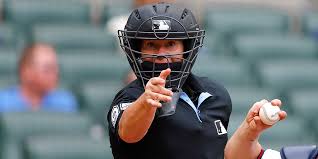
Jen Pawol, the first female umpire in Major League Baseball.

Major League Baseball, the oldest professional sports group in the United States dating back to 1876, has the distinction of being the first sports organization to break the color barrier in 1947 when Brooklyn Dodgers General Manager Branch Rickey signed Jackie Robinson.

Nearly 30 years later, Hall of Famer Frank Robinson became the first non-white manager in baseball.

So one would think that MLB would continue their trailblazing ways in other facets of the game; for example, hiring female umpires.  Not until August 9 of this year did MLB have one.  Her name:  Jen Pawol.

Other sports beat baseball to this breakthrough by several years.  The National Basketball Association (est. 1946) hired their first female referees in 1997:  Dee Kanter and Violet Palmer.  The National Football League (est. 1920) hired their first female official in 2015:  Sarah Thomas.

Baseball was the first, however, when it came to hiring the first female general manager of any sport: Kim Ng of the Miami Marlins in 2020.

Last Saturday, Pawol umpired at first base for the Marlins-Braves game in Atlanta.  Some of the fans applauded her as she walked onto the field.  Many of the players wished her well.

At her postgame press conference, Pawol was genuinely appreciative of the support MLB, her family and friends and even fans have shown her.  She did not hide her thrill of having her dream come true, 10 years in the making. 

“I always wanted to umpire.  I knew I had the bug . . . in my DNA.  Then making it into a career I realized, wow, I could be a major leaguer.”

Umpire crew chief Gene Guccione who was sitting next to Pawol said that “This is one of the proudest moments I’ve been part of in my career.” 

When asked what was the most special moment for her, she said it was “pretty powerful and awesome” to see her friends and family in the stands.

I’m sure there are people who oppose female umpires.  Yet, why prevent someone who can do a job to do that job?  When I saw her emotions describing her journey, I couldn’t help but think of how inspirational it must be to all the little girls who play or watch sports, to see that someone that looks like them can umpire baseball?

Guccione added that “it gives me chills even thinking about . . .the magnitude of this whole thing and how hard she’s worked.  My daughter was so excited to meet Jen.  [She’s] a great role model for girls and women and I am so proud of her.”

One other thing crossed my mind.  How fans regularly despise any sports officials whose job it is to maintain order in a game.  How often their decisions are heckled.  These people are paid the least amount of money in sports played by millionaires and receive little to no respect.  Yet here is Jen Pawol at age 48 putting herself into the fire, not knowing how she will be received or accepted, exuding joy at just being given the opportunity to do something that she loves. 

The cap she wore umpiring is headed to Cooperstown.  I can’t wait to see it next time I visit the Baseball Hall of Fame.

Neil Diamond or Billy Joel?

If you were stranded on a deserted island and had to hear music from Neil Diamond or Billy Joel, which one would you choose?

Diamond and Joel (those are their real last names) have been on my mind recently after seeing “A Beautiful Noise: The Neil Diamond Musical” and the HBO Max documentary “Billy Joel:  And So It Goes.”  Both projects serve as close to an autobiography fans are ever going to get from these artists.

It’s remarkable to see the similarities of these pop stars. Each was born in the 1940s in a different borough of New York City:  Diamond in Brooklyn (1941) and Joel in The Bronx (1949). 

Both men are Jewish and moved to Los Angeles when they were starting out.  Diamond never left, while Joel returned to New York after a few years.

Neil Diamond and Billy Joel are two of the most prolific rock and roll singer/songwriters of their time.  Diamond has sold more than 130 million records worldwide while Joel has sold more than 150 million.

When first recording, both lacked confidence in their singing voices which is hard to believe.  Try imagining other singers recording their songs.

Each artist had 13 Top Ten hits during their prime.  For Neil Diamond, that was from 1966 to 1982; his first hit was “Cherry, Cherry”; his last was “Heartlight” in 1982.  Other hits include: “Cracklin’ Rosie,” “Shilo,” “Forever in Blue Jeans”, “Solitary Man,” “Sweet Caroline,” “Song Sung Blue,” “America,” “Kentucky Woman,” “You Don’t Bring Me Flowers,” “I Am I Said.”

For Billy Joel, that was from 1973 to 1993; his first hit was “Piano Man” and his last was “The River of Dreams.”  Other hits include:  “Just the Way You Are,” “Movin’ Out,” “A Matter of Trust,” “An Innocent Man,” “She’s Always a Woman,” “It’s Still Rock and Roll to Me,” “New York State of Mind,” “My Life,” “The Longest Time,” “Allentown.”  Most impressive is that Joel had success covering more years but with fewer studio albums:  13 to Diamond’s 43.

Each artist wrote a song that shared a common opening of naming famous people.  Diamond’s 1970 “Done Too Soon” mentions 25 celebrities while Joel’s 1989 “We Didn’t Start the Fire” references 118 including major news stories.  

Both married multiple times:  Diamond had three wives, Joel four.  Diamond has four children, Joel three daughters, two from his most recent marriage.  Both smoked, though Diamond quit decades ago.

Their upbringing differed, however.  Diamond had a more stable home life than Joel’s with supportive parents.  While their envisioned their son getting a steady job like a doctor, they gave him a guitar for his 16th birthday. 

Joel was a prodigy who began playing piano at age four.  His parents were supportive of their son’s talent, but his father wanted him to play classical music.  When he heard Billy adding a rock and roll tempo to a classic piece, he smacked the side of his heard.  At eight years old, his father left the family.  Years later, Joel sought out his father to discover he was living in Vienna and had another son.

Joel has struggled with depression and addiction.  In his early 20’s, he attempted suicide twice.

Both artists extended their careers delivering electric live performances:  Diamond performed over 1,700 concerts while Joel did over 2,400.  They toured into their 70’s.

Earlier this year, Joel was diagnosed with normal pressure hydrocephalus (NPH) forcing him to cancel concerts.  Diamond finished touring in 2017 after discovering he had Parkinson’s disease.

Back to my opening question, who would I choose if I were on that deserted island?  While I have enjoyed both men’s oeuvre, I’d have to choose Billy Joel.  His melodies have more complexity, his lyrics speak to a deeper analysis of the human spirit and his songs haven’t dated as much as Diamond’s. 

Additionally, as an instrumentalist, Joel is a more gifted pianist than Diamond is a guitarist. 

Recently I saw “A Beautiful Noise” and noticed that most of the audience was older than me.  When I saw Joel’s Madison Square Garden concert on TV last fall, most of the audience was younger.  His musicality still resonates.

Neil Diamond

Billy Joel

Fifty years later, “Jaws” still bites

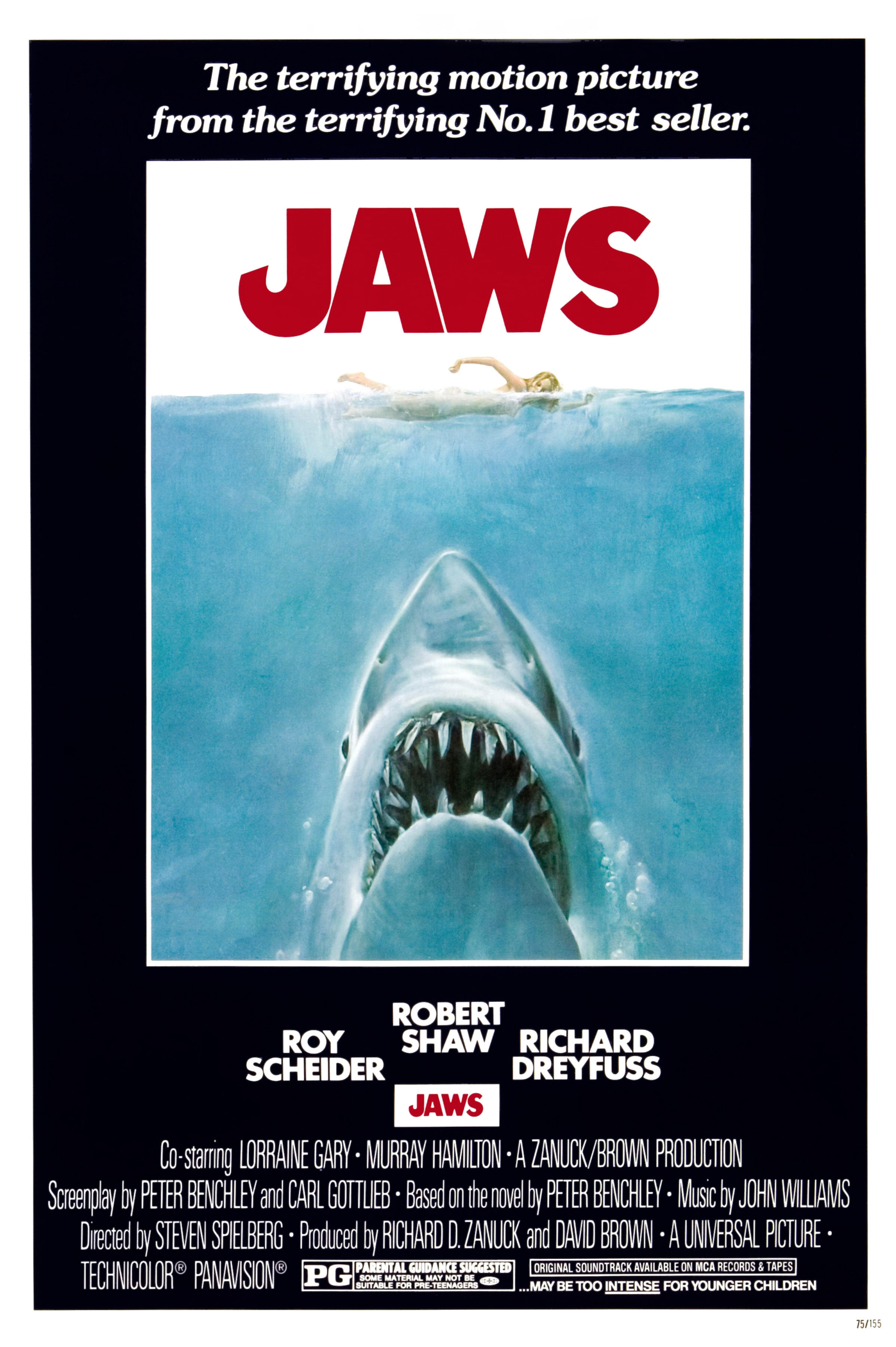
It’s hard to believe that half a century has passed since “Jaws” was released in July of 1975.  I was in Palm Springs with my family when we went to see it at the Plaza theatre.  I took the paperback of the Peter Benchley novel with me so that I could finish it in our motel room before seeing the movie.  It remains one of the most memorable film experiences I’ve ever had.

Earlier this month I watched “Jaws” for the first time in many years along with my 21-year-old son who had never seen it.

In order to temper unrealistic expectations on his part regarding a 50-year-old film, I explained to him that “Jaws” was made 20 years before CGI came on to the scene.  Spielberg was one of the first directors to use CGI for 1994’s “Jurassic Park.”  Even then, he insisted on using practical effects with the dinosaurs and not rely solely on computers.

Smartly, Spielberg reveals little of the shark until the climax.  When it is finally shown as it breaches onto the boat swallowing Shaw’s Quint, the use of a mechanical puppet is frightening since he is actually interacting with a real object and not reacting to nothing but a green screen.My son came away impressed.

What elevates “Jaws” from other excellent movies is the impact its success had on the movie industry.

The summer blockbuster.  Before “Jaws,” studios did not release their best pictures during the summer due to many theatres not having air-conditioning.  Once “Jaws” opened to packed theatres, it became clear that people would stand in line for an “event” film no matter the weather.  “Jaws” earned $260 million domestically in its initial release.  Two years later, “Star Wars” would open Memorial Day weekend and surpass that mark, earning over $300 million.  Thus, the summer blockbuster was born.

Wide release.  Eschewing the common exhibition practice of opening a film in a small number of theatres, gradually expanding over several weeks, “Jaws” opened in over 400 theatres.  This greatly boosted its earnings at a faster clip (this was before multiplexes became commonplace).

Trailers on TV.  It was uncommon to advertise new movies on television.  Universal Studios aired commercials a few days before the release of “Jaws” thus generating high interest. 

Just as Alfred Hitchcock’s 1960 “Psycho” made people afraid to take showers, “Jaws” made people fearful of swimming in the ocean.

Additionally, “Jaws” catapulted the careers of Steven Spielberg, John Williams (who would go on and score the bulk of Spielberg’s canon), Roy Scheider, and Richard Dreyfuss.  Before “Jaws,” Robert Shaw had established himself as an in-demand character actor for a quarter of a century which explains why his name had the highest position in the credits.  Sadly, his career would be cut short, dying three years later at age 51from a heart attack.

Making “Jaws” took longer and cost more than expected.   Since much of the film was shot in Martha’s Vineyard off the coast of Massachusetts, the sea water damaged the 25-foot mechanical shark that was the film’s main prop leading to numerous delays.

The original 55 days of shooting tripled to 159, while the $3.5 million budget ballooned to $12 million.  A new documentary on the making of the movie depicts the stress that Spielberg was under, especially when hearing that studio bosses were thinking of shutting down the production.

Once filming finished, Spielberg had a full-blown panic attack.  He thought he would never work in Hollywood again.

Spielberg revealed that it took him years to overcome this anxiety, often having nightmares even after achieving great success.  To overcome his trauma, he would secretly board the Orca boat, part of the “Jaws” stop on the Universal Hollywood Studios tour, and lay down in the cabin to calm himself.

Clayton Kershaw, the Greatest Dodger Pitcher

Most baseball experts view Dodger legendary pitcher Sandy Koufax’s six-year run of outstanding dominance (1961-1966) as the best of any to ever play the game.  Unfortunately, Koufax had to retire at age 30 due to arm problems which limited his career numbers.

It could be argued that Clayton Kershaw is the greatest Dodger pitcher when it comes to longevity.

In his 18th season at age 37, Kershaw got his 3,000th strikeout on Wednesday to place him in an elite group of 20 pitchers who have reached that milestone.  No other Dodger is on that list.  It came on his 100th pitch of the night, the final out of the sixth inning.  That allowed a more extended time to celebrate Kershaw and his remarkable achievement with the fans and his family.  How magical was that!

It’s nice to know that Koufax has been Kershaw’s inspiration whenever Sandy visited spring training camps.  Kershaw was the one Dodger player to speak at the dedication ceremony of Koufax’s statue.  How nice a coincidence that both pitchers are lefties and have last names that start with ‘K’ which is shorthand for strikeout.

Kershaw won the Cy Young award three times in 2011, 2013, 2014, that last year also winning the MVP award.  Only 20 other pitchers in the history of the game have earned that honor.

Look at how Kershaw compares to others in the 3,000-strikeout club:

  • He is one of four left-handed pitchers on that list; Randy Johnson, Steve Carlton and CC Sabathia are the others.
  • He is one of three pitchers who stayed with the same team for their entire careers; Walter Johnson (Washington Senators) and Bob Gibson (St. Louis Cardinals) are the others.
  • He ranks fourth with the most strikeouts per nine innings.
  • He ranks second behind Walter Johnson (2.17) with the lowest career ERA of 2.52.
  • He ranks first with the highest winning percentage of .697 (216-94), meaning 70 percent of his decisions were victories.

What makes these achievements even more remarkable is the type of player and person Kershaw is:   

  • He’s a modest man who puts his team ahead of his individual feats.  To prove how true that is, last year when he was injured and hardly pitched, he was ecstatic about the Dodgers winning the World Series even though he admitted he had nothing to do with it. 
  • He leads by example.  His teammates marvel at his strict discipline in his preparation, adhering tightly to a timed routine that never varies which explains his consistency.
  • He is a competitor who pitches even better when there is traffic on the bases.
  • He is a decent person who never swears on the mound, a man of faith, who along with his wife Ellen has raised over $23 million assisting at-risk children and their families around the world with their Kershaw’s Challenge organization.

In his press conference after the game, he mentioned one pitcher in his time with whom he modeled himself after:  CC Sabathia.   Kershaw mentioned how Sabathia would often pitch on short rest and put his team on his shoulders during the playoffs.  Sounds like Kershaw and his competitive approach to the game.  No matter how many tough times he’s had in the playoffs, he’s the first one willing to push his body to its limits to help out his team.

I had a hard time deciding whether to attend Wednesday’s game. The big draw was the high chance that Kershaw would reach 3,000 strikeouts—he only needed three more. When you go to a game, there’s no guarantee your team will win or that you’ll witness something extraordinary like a no-hitter. But this felt like a near certainty. However, ticket prices had skyrocketed. In the end, my rational side won over my emotions, and I chose to watch the game on TV. That was a mistake.

That’s why when Kershaw is elected into the Baseball Hall of Fame five years after he retires, I will travel to Cooperstown to see that happen.   It’s the least I could do to pay my respects to a man who has given me so many wonderful moments as a Dodger fan.

I Love Desi

I just read the new book, Desi Arnaz:  The Man Who Invented Television by Todd S. Purdum, and came away with a higher appreciation for Arnaz, who some pejoratively referred to as Mr. Lucille Ball.

Arnaz was the mastermind behind “I Love Lucy” and Desilu Studios.  He’s responsible for moving television production from the east coast to the west in the 1950s, establishing situational comedies shot on film in front of a live audience, and conceiving of re-runs, the concept that networks could earn money by airing repeat viewings instead of paying for summer replacement shows.

“I Love Lucy” was created to keep the Arnazes together after 10 years of marriage which included long periods of separation due to Desi’s orchestra being on the road.

In 1950, Lucille Ball had a popular radio show, “My Favorite Husband.”  When TV executives sought new series to develop, they harvested radio shows to make the transition.

What resulted was “I Love Lucy” which only happened after CBS and their sponsor Philip Morris agreed to their demands: that Desi replace actor Richard Denning as Lucy’s husband, and that the show be produced in Los Angeles where they had their home.

At the time, most TV shows were produced in New York and nearly all were aired live on the east coast with movie cameras capturing the shows off television monitors in order to air them in other time zones.  Called kinescopes, these were of inferior quality compared to a show produced directly using motion picture cameras (videotape didn’t exist yet).

Reluctantly, the network agreed to all their terms including having the show filmed in front of a live audience with a revolutionary three-camera concept.  Famed cinematographer Karl Freund figured how to properly light the set for both long and close-up shots as all cameras simultaneously captured the action.  By having the show filmed allowed for high quality repeats to air.

When “I Love Lucy” premiered on Oct. 15, 1951, it quickly rose to become the number one rated show in America for four of its six seasons.

Near the end of the 1950’s, Desilu was producing more shows for television than any other studio.

He was the first Latino to head a major studio, Desilu, which at one time had more programming on television than any other studio.  In fact, to this day, no other Latino has held such a powerful position in Hollywood.

Unfortunately, such success led to Desi spending long hours at the studio, leaving his wife and children alone.   It’s ironic that the show was created to ensure they had more time for themselves, but instead the opposite happened which ultimately led the couple to divorce in 1960 after 20 years of marriage.

Sadly, Desi Arnaz never received an Emmy nomination for his performance (Lucille Ball earned two Emmys for the show).

Lucille Ball was Arnaz’s strongest supporter of what he accomplished as a studio mogul.  She’d always give him credit for creating the show and running Desilu successfully while so many in the Hollywood community didn’t.

Once they went on with their separate lives, they remained close.  He would continue producing her TV program “The Lucy Show” and near the end of his life, Ball visited him at his house in Del Mar.  According to daughter Lucie Arnaz, the last phone call they had with one another occurred on their wedding anniversary, Nov 30, 1986, with each one repeating “I love you” to the other.  Two days later, Arnaz passed away.

When Ball received the Kennedy Centers honors five days later, actor Robert Stack, star of the Desilu-produced “The Untouchables,” read a note from Desi which ended:  “I Love Lucy was never just a title.”