Trump Looked Healthier Than Biden: So What?

I recall Muhammad Ali’s last boxing match against Trevor Berbick in 1981.  At almost 40 years old and out of shape, it was a shame to see the greatest boxer of all time stand motionless, covering his head with his gloves, moving his body back against the ropes, avoiding contact to his aged body.

That’s what I thought of as I watched President Joe Biden debate Former President Donald Trump.

If you plan on voting for him, it was painful to watch.  No one wants to see a decent person look feeble.  But he is 81.

If you plan on voting for Trump, the fourth of July came early.  Shoot off the fireworks.

Presidential debates are a form of entertainment where viewers tune in to see if their guy can make the other guy look bad.  And Biden looked bad, but Trump sounded worse, his lies and hyperboles swimming in superlatives:  “He’s the worst,” “I’m the greatest.”

Close your eyes, don’t be fooled by the “Apprentice” reality star, and listen to what he says about the country you love.  He sounds anti-American.  Remember his Inaugural speech which painted a dark and damaged picture of America? 

The first televised debate of presidential candidates happened in 1960 between Vice President Richard Nixon and Senator John Kennedy.  People who watched the first debate thought that Kennedy won it.  Those who heard the debate on radio thought that Nixon won it.  And ever since then, Americans have chosen presidents based more on their appearance than on their substance.

If that history is any indication, God help America with a second Trump term.

For me, I don’t care what policies Biden or Trump which to implement, how they feel about Ukraine or Israel, about immigration or inflation.  This election is about democracy.

I will vote for Biden because of what he represents—stability, the Constitution, honesty, decency.  A vote for Trump represents chaos, anarchy, lying, meanness.

It stuns me that just 12 years ago, Americans voted for Barack Obama’s second term.  I’m not sure if he were running today if he would get re-elected.

For those Americans who still believe in voting for the candidate who will best lead the most vital country in the world in the future, I’d rather have a frail old man than a hateful one.

Trump thrives on attention and he has already made his mark in history.

He is the first president to be impeached twice.

He is the only former president to be a convicted felon.

He is the only president to break with the traditional smooth transition of power began by George Washington when he refused to attend Biden’s Inauguration.  That act is what separates us from other countries.

People have short memories of when Trump was in office.  Not a week went by without a hysterical false statement from him or a cabinet member resigning from the chaotic West Wing.

After the debate, it is surprising how many Democrats dumped on Biden or wish to drop him off the ticket.

There is one thing Biden has going for him more than any other Democrat:  he beat Trump by seven million votes.

When your guy is down, it is not the time to step on him, but to offer support, to get him up from the mat.

This election is not about Americans’ personal financial situations, it is about America’s democratic situation.

The question foremost on Americans’ minds should not be, “Are you better off today than you were four years ago?”  The question must be, “Is democracy better off today than it was four years ago?”

The clear answer is January 6, 2021.  Trump almost didn’t leave office.  He refused to accept facts that he lost the election.  If he’s elected again, what will he do come January 6, 2029?  He may never leave the White House.  His followers will be more violent.  How can voters hand over the keys to American democracy into his hands again?  This country will never be the same again.
Mr. Clutch, My Hero

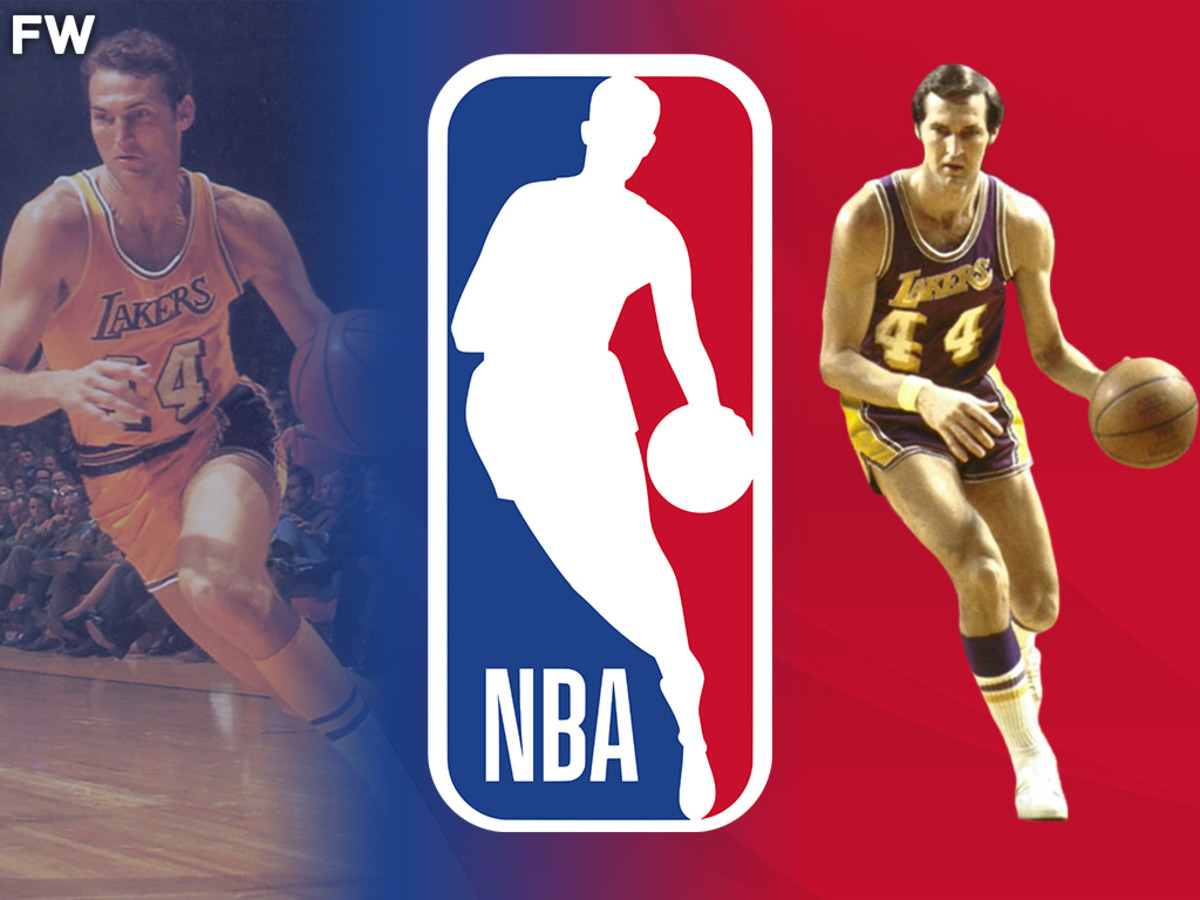
As a little boy, I had no aspirations of becoming a professional athlete.  I was short, overweight and had zero natural abilities.  But I had a basketball hoop attached to the backyard patio roofline where I shot 16-footers every day imagining I was Jerry West of the Los Angeles Lakers.

That’s why it was sad to hear the news that the NBA Hall of Famer had passed away at 86.

West along with Hall of Fame Dodger pitcher Sandy Koufax were my two biggest sports idols growing up.

Jerry West had a handful of nicknames including Mr. Clutch and The Logo.  The one I liked best was the lyrical Zeke from Cabin Creek making him seem mythical.

I respected his tenacity to want the ball every time he dribbled down the court, especially during playoff games.  In his 14-year career, he made almost have of his shots which is why I felt confident that whenever he had the ball in his hands the Lakers had a chance to win. 

He had his nose broken nine times.  Imagine having the courage to go through that and to continue playing at an intense level, unafraid of driving to the basket.

The one Achille’s heal was his inability to beat the Boston Celtics in the NBA Finals.  The Celtics beat the Lakers all six times they played each other with West on the team.  Even when the Lakers clearly had the superior team in 1969, something always happened which prevented the Lakers from claiming victory. 

Three of those contests went seven games:  only seven points separated the two teams in those deciding matches.

Laker fans felt the heartache of Jerry West who despite playoff heroics could not find a way to get the leprechaun off the Lakers’ backs.  In fact, he outplayed everyone in 1969 in points and assists, averaging 38 points per game making half of his shots, earning the MVP award, the only time a player on a losing team won it.  That did little to take away the sting from West’s psyche.

In his memoir, West described the depression he felt whenever the Lakers fell short of a title.  Even after his playing days were over and he became an award-winning basketball executive, West could not sit and watch his Lakers in playoff games.  He had to stand in a hallway away from the court, or drive around town in his car.  It’s funny that I used to do the same thing as a fan, unable to watch critical moments in a game, fearful that the Lakers would lose again.

Jerry finally won his one and only championship in 1972.  That team had the best record ever by an NBA team at the time of 69-13 which included a 33-game winning streak, the most consecutive wins by any team that still stands today.

When I was 13, I chronicled the streak by cutting out sports articles from the newspaper and taping them into a scrapbook.  

Earlier that same year, Sandy Koufax was voted into the Baseball Hall of Fame, a good year for my idols.

I was fortunate enough attend the game when the Lakers won that elusive NBA championship against the New York Knicks.

When tickets went on sale for the Finals, my sister Debra drove me to the Fabulous Forum in Inglewood.  After waiting in line for hours, we were able to get tickets for Game Five at the face value price of $15.  That wouldn’t even get you a beer at a game today.  Of course, we weren’t sure if there would be a Game Five at the time.

As it turned out, the Lakers were up three games to one when they returned home at LAX on May 6th to play for the championship at the Forum the next day. 

We were so excited that my sister drove us to LAX to see the players. For people younger than 50, what I’m about to tell you may seem shocking.  

Back then, professional athletes would de-plane at the same terminal as the general public and walk by themselves (no entourages) towards the carousel baggage claim area.  Security was scarce so my sister and I stood back watching the players wait around for their bags.  That was a perfect opportunity for me to ask for their autographs.

And then there he was, number 44, Jerry West, 20 yards away from me—and I froze.  I was too nervous to approach him for an autograph.

Instead, I settled for two of the five starters, starting forwards Happy Hairston and Jim McMillian, and back-up center Leroy Ellis.  I even got Hall of Fame announcer Chick Hearn’s signature as well.

When my brother, sister and I went to the game the next day.  Based on past experiences, we had no confidence that they could finally win a championship, but they did, beating the Knicks 114-100.  It was the only time I was at a sporting event that resulted in my team winning a trophy.

I feel fortunate that both of my boyhood sports heroes have lived long lives (Koufax will turn 89 later this year).  Though I never shook their hands or got autographs, it has been a warm feeling knowing that they were still around for most of my life.

A page from my scrapbook chronicling the 1971-72 Lakers.

Here’s to my Sons

For me Father’s Day is not accurately named.  It should be Children’s Day for without children there would be no fathers.

As a child, I always looked forward to both Mother’s and Father’s days.  My older brother, sister and I would make up signs and hang them up early in the morning so that when Mom and Dad woke up, they’d be surprised.  We also created our own greeting cards.

Those days hold a special place in my heart because it gave us a chance to show our appreciation and love for the best parents any kid could have.

I only had 15 Father’s Days with my dad before he died, but it felt less than that because I was too young to recall the first five or so.

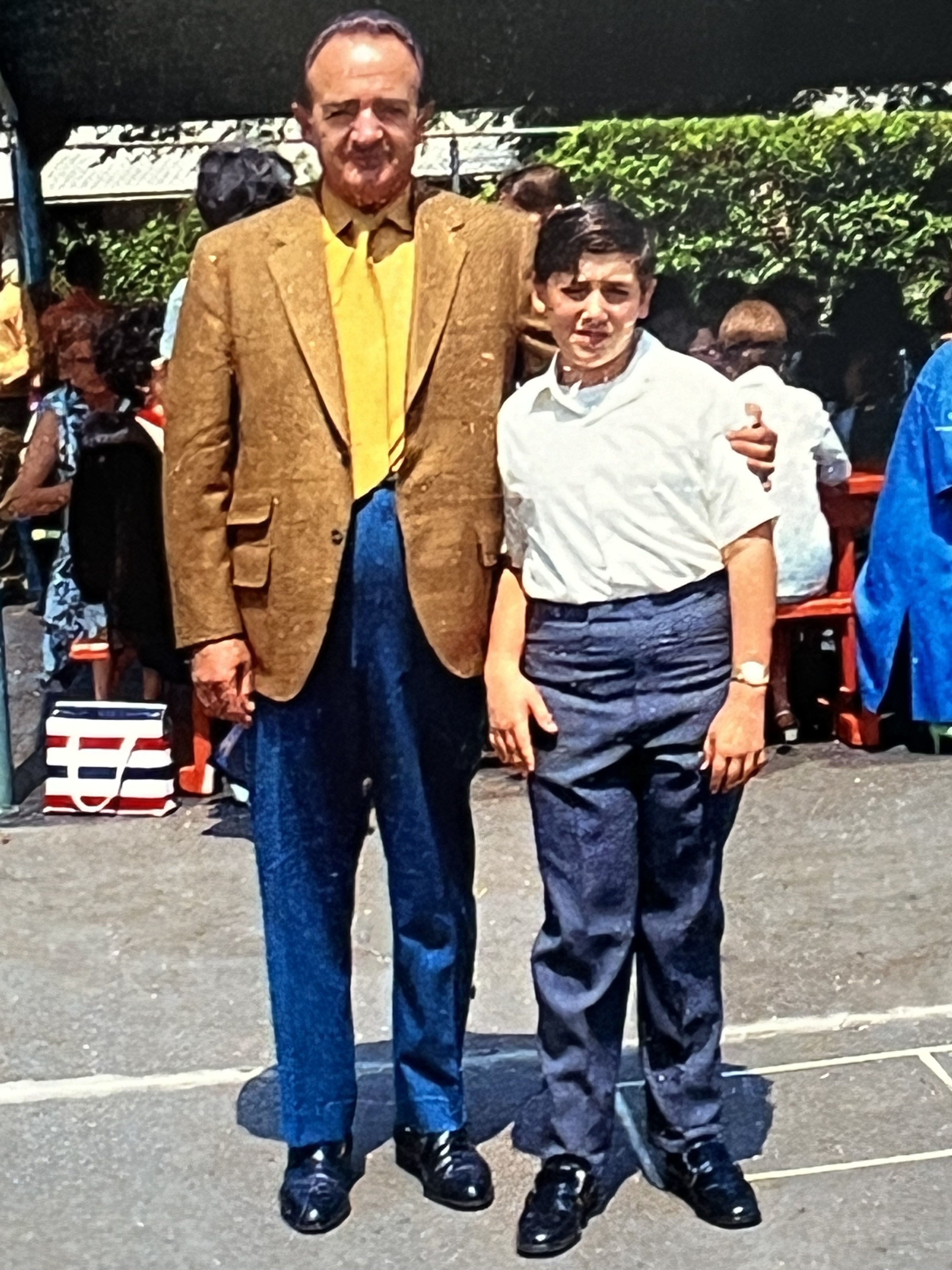
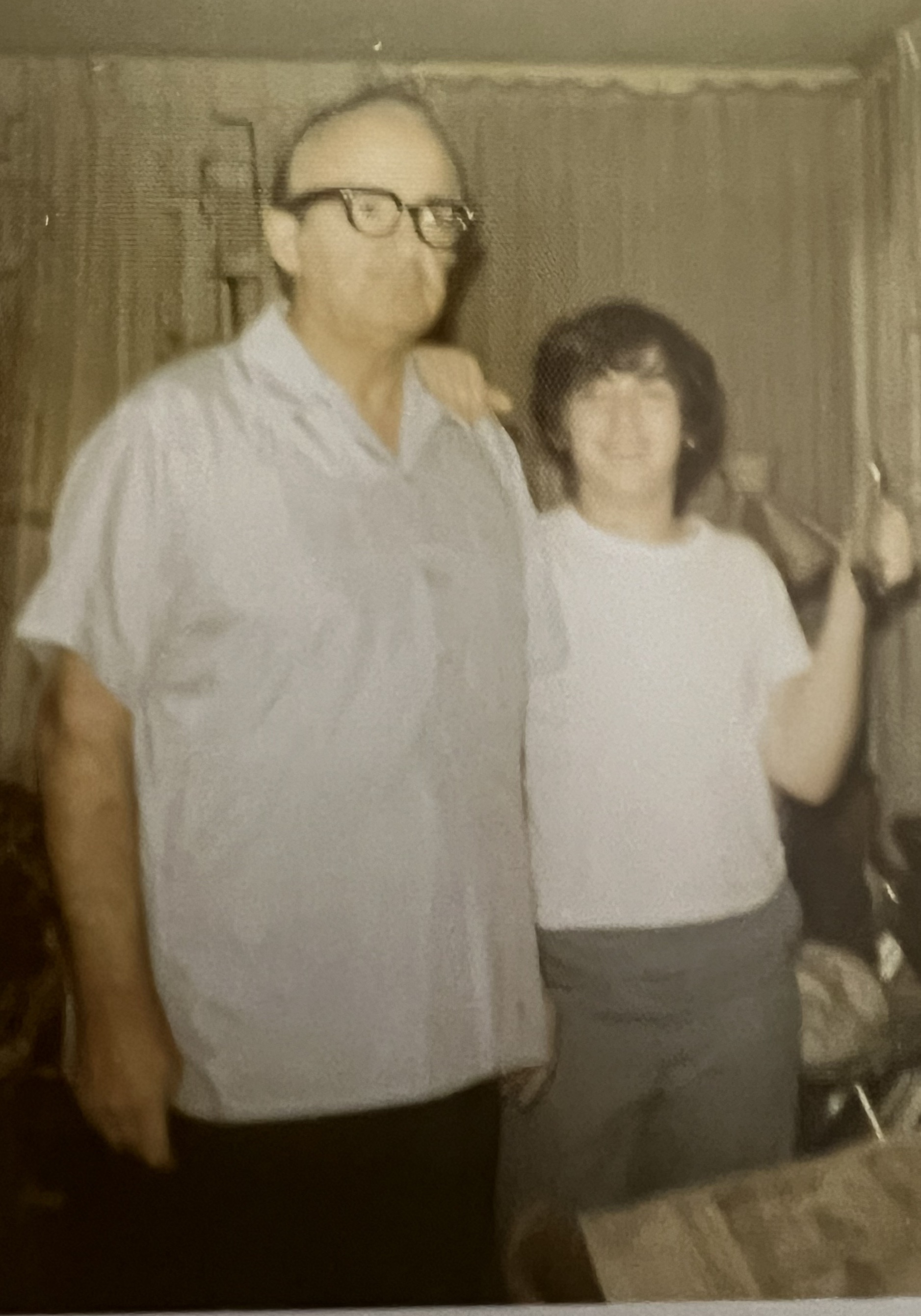
In seeking out photos with my father and me for this column, I was stunned to discover that only two exist.  One was taken at my elementary school promotion ceremony and the other was in our house. 

While we both look nice in the 1970 promotion photo, it is posed.  The way we appear in the candid photo from 1971 when I was 13 years old captures a moment of life.  I’m not sure what my dad was thinking about as he looked past the camera or what I have in my hand (a harmonica?), but the most significant detail shows my affection for my father:  my hand resting on his shoulder.  And, boy, do I wish I had a shoebox full of those photos now.

This year will mark my 26th Father’s Day.  It is an honor to be a dad which is why this Father’s Day is a tribute not to me but to our sons:  Ben (25) and Max (20).  Without them, this Sunday would just be any Sunday.

For the past two years, my wife and I have been empty nesters since Ben works in Salt Lake City and Max attends college up north.

“Absence makes the heart grow fonder” is an old saying, but there is a reason it has stayed around because it is true.  As much as my wife and I love one another and enjoy each other’s company, not a day goes by when we don’t think of what Ben and Max are doing or recall a cherished moment with them.  When the phone rings and their names appear on the tiny screen, my heart smiles.  I can’t wait to hear their voice.

We still have beds in their former bedrooms.  Each room still has evidence of a child from games to trophies.  Their smiling faces at various stages of life look at us in frames all around the house.

The last Father’s Day I spent with both boys was back in 2022.  Shortly thereafter, Ben moved to his new job.  Max has been with me the past two years because his college finals wrap up before Father’s Day. That’s good because not having any of the boys with me would not be Father’s Day.

Notice that in the photo from 2022 where my hands are this time–hugging my sons.

It has been a pleasure watching them blossom into young men, navigating their own path through life’s highs and lows, still retaining their core values.  It makes me feel good whenever they say or do something that reminds me that they paid attention to how they grew up with my wife and me.  There were times when it didn’t seem they were listening, but they were.

That’s when I think about how lucky I am to have lived this long to see the child to adult transformation, a transition which my father never witnessed with me.

Dad and Brian at elementary school promotion.
Dad and Brian at home.

Brian with Max and Ben.

My Blue Heaven

When was the last time you were at a book event?  You know, where the author talks about his new book, takes questions from the audience, then signs your copy, personalizing it for you?

It has been a while since I was last at one, but this month I’ve been to two; coincidentally both books are related to the Los Angeles Dodgers. 

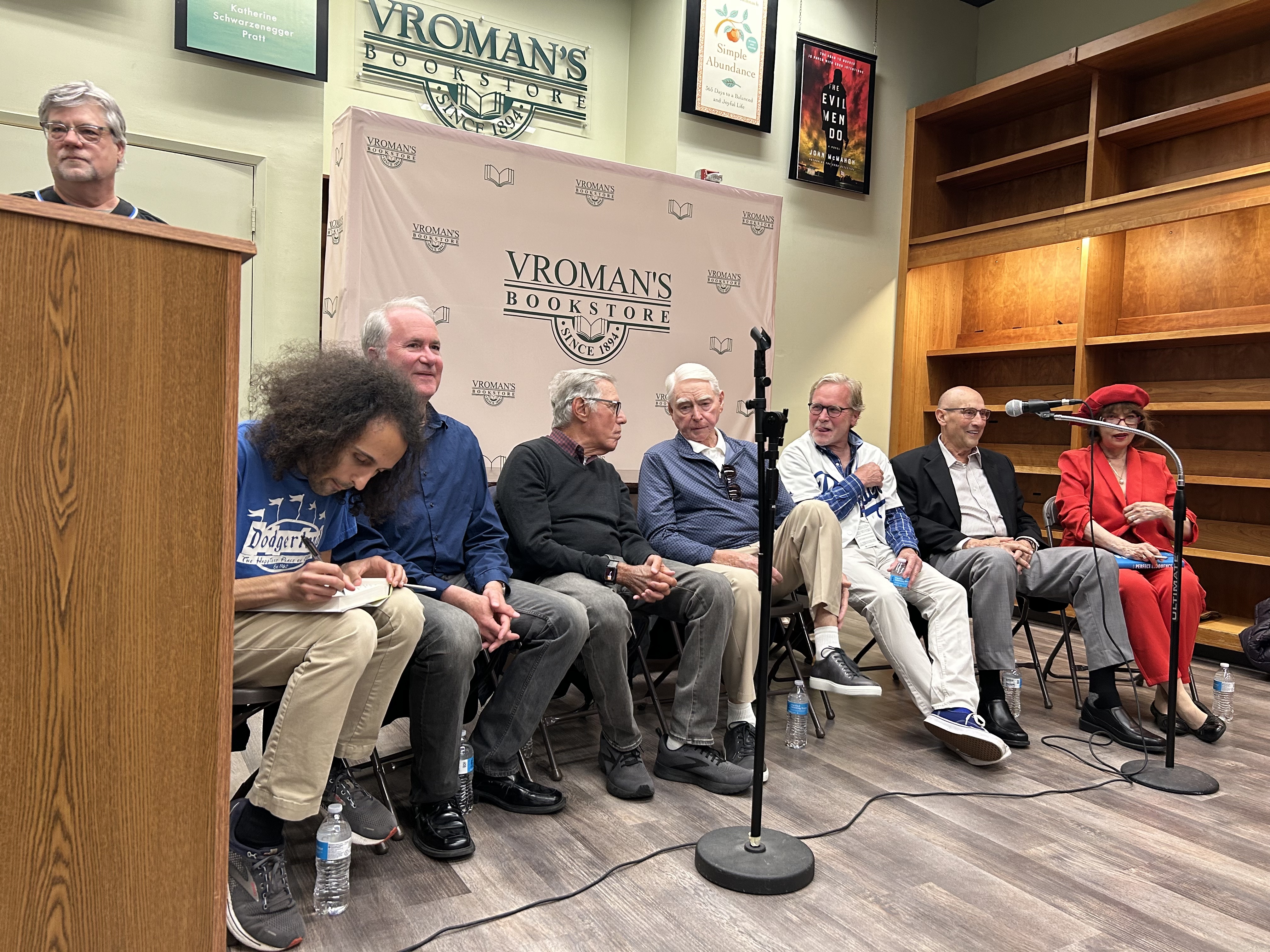
One book event was held at Vroman’s in Pasadena, an institution among independent bookstores since 1894; it is up for sale which makes its numerous loyal customers very nervous.

Perfect Eloquence:  An Appreciation of Vin Scully, edited by Tom Hoffarth, is a compendium of Vin Scully stories about the legendary Dodger announcer who passed away in 2022.

The physical book cover is printed in Dodger blue with an illustration of a microphone.

The top floor of the bookstore was overflowing with people.  This is the effect Vin Scully has on people two years after he passed away at age 94.

In addition to editor Hoffarth, seven other contributors were also in attendance:  journalists Chris Erskine, Paul Haddad, Pat Morrison, Ron Rapoport, Sammy Roth, and two very special guests, Hall of Fame announcer for the Los Angeles Kings Bob Miller and former Los Angeles Dodger executive Fred Claire.

Each one spoke about the piece they wrote for the book.  Each remembrance shared one thing in common:  that Vin Scully was the most generous man they every knew.  Notice that the focus is on the man, not the voice, which is how Vin Scully himself would have preferred to be remembered. 

Paul Haddad reminisced about the one time he met Vin Scully a couple of hours before a ballgame.  When he was escorted to the Press Box by a Dodger official, he saw Vin speaking into a microphone.  Haddad asked the official, “Is he recording commercials?”  The man responded, “No, he’s practicing.”  This story underscored how prepared Vin Scully was no matter how long he did the job, and he did the Dodger announcing job for 67 years.

The stories shared by Fred Claire were the most significant ones for he had a 50-year friendship with Vin.  He knew him better than anyone.

Fred Claire said that Vin had a perfect life in that he grasped the meaning of how to live one’s life:  being gracious to others.  He mentioned one time at Dodger Stadium a young reporter armed with a tape recorder came to interview Vin Scully before a ballgame.  The interview lasted 45 minutes.  Afterwards, Claire looked at the reporter who had tears in his eyes.  It turned out the tape recorder wasn’t working.  So Claire explained the situation to Vin, who said, “Tell the young man we’ll do the interview again.”

Claire spoke about how Vin and Jackie Robinson were very similar in their temperament.  At one of the last baseball events Jackie attended, when his vision was so diminished that lights had to be turned off whenever he was inside, a fan from the stands threw a baseball towards Robinson for him to sign, unaware about his poor eyesight.  Not seeing the ball, it bounced off his shoulder and hit his head.  People around him were yelling at security to throw the man out, but Jackie asked for the ball, signed it, and told people, “Return this to the gentleman.”

As Robinson famously said, “A life is not important except in the impact it has on other lives.”  In Jackie’s and Vin’s case, they were very important people indeed.

The second event took place at Stories Books and Cafe in Echo Park.  Andy McCullough, a senior writer at the Athletic, wrote The Last of His Kind:  Clayton Kershaw & The Burden of Greatness about future Hall of Famer pitcher Clayton Kershaw.  Andy was a beat writer for the Los Angeles Times covering the Dodgers which is how he knew Kershaw.  His former Times colleague, famed columnist Bill Plaschke, was the moderator.

What made the event extra special for me was that both McCullough and Plaschke visited my journalism classes.  When I did the high school newspaper, I would reach out to professional journalists to inspire my young students. 

When I mentioned this to both men that night, they did recall those outings.  Plaschke even remembered the name of a couple of my students who have remained in touch with him over the years.  I told him that I retired from teaching in 2020; he went up to me, shook my hand and said, “Bless you for what did.”

I happened to be the first person in line to have McCullough sign a book.  He didn’t have a pen, but I did and gave it to him.  After opening the book to locate a place to sign, he paused, puzzled and said, “I’ve never done this before, what do I write?”  That day was the release of the book so this was his very first signing event.

My initial thought was to tell him that I had two books published and had signings, but instead told him blandly, “Write ‘thanks for your interest’.”

If you’re a Dodger fan, you will have “interest” in having these two insightful new books published in the same month.  They will put you in Blue Heaven.

Editor Tom Hoffarth, contributors Sammy Roth, Paul Haddad, Ron Rapoport, Fred Claire, Chris Erskine, Bob Miller, Pat Morrison at Vroman’s Bookstore.

Author Andy McCullough and Moderator/Columnist Bill Plaschke at Stories Bookstore.

Laughter is No Joke

It seems that every day the world gets worse.  It makes one yearn for the good old days of the Pandemic shutdown when for a short while countries weren’t invading other countries and there was a unified universal effort to invent a vaccine for Covid-19.

These days I find myself taking days off from reading the news, intentionally ignorant of elections, trials and protests.  A daily dose of negativity can easily trigger depression.

For a while now, I balance the “end of the world” headlines with more positive stories about people, about decency, about compassion.

There is another anecdote to all the daily direness:  laughter.

Last week, my wife, sister and I went to see comedians Jerry Seinfeld, Sebastian Maniscalco,

Jim Gaffigan, and Nate Bargatze at the Hollywood Bowl as part of Netflix’s Joke Fest.

Each comic did a 30-minute set.  I’m not exaggerating that I can’t recall the last time I have laughed so hard.  Yes, my jaw was sore after the two-hour concert.  The night was a master class in comedy.

I’m not sure why those four comedians in particular were performing together.  However, what made the humor so pleasing was the lack of jokes about politics and sex, two topics that make up the centerpiece of so many stand-up comics’ repertoire.  And, except for a few times, no obscenities were used—proof that one doesn’t have to be vulgar to be funny.

These four men didn’t tell jokes, per se; rather, they told stories about everyday occurrences in life that so many people have experienced.  For example, Gaffigan described how computer programs prompt us to continuously change our passwords, then ask for verification that we are not robots by asking us to pick out a stoplight from a series of photos.  He struggles with this because if there is an image of a pole that is cut off, does that count as a signal? 

Each comedian has his own way of speaking, his own facial expressions, and his own physical movements.  Sebastian described taking his young family to Universal Studios and his interactions with employees who really don’t want to be there.  “What’s the deal with the quality of the Los Angeles workforce?” But it’s his bulging eyes and outstretched arms as he bends his body that make it funny.

Adding to the enjoyment was the laughter of 18,000 fellow Angelenos from all walks of life in the audience.  Laughter unified us.

It is said that the aphorism “laughter is the best medicine” originates from the Old Testament. 

Writer Norman Cousins decades ago wrote about the healing of laughter when he was diagnosed with a disease and was given a one out of 500 chance of surviving.  He attributed his recovery in part to watching Marx Brothers movies and “Candid Camera” TV episodes.

Well, that night, I felt I was hooked up to an IV of joy for two hours.  I highly recommend it for everybody.

There was a special ed teacher who was dressed as a clown—literally.

You read that headline right. I know it’s hard to believe, but I’ll say it again.

I knew I was in trouble when I walked into the classroom and spotted a special education teacher dressed up as a clown.

This is just one bizarre sight I’ve seen in my job as a university supervisor of secondary school student teachers that gives me pause about how far standards have fallen in public schools since I retired four years ago.

When the pandemic forced the temporary closure of schools, officials tiptoed around accountability, treating students with kid gloves for fear of triggering mental health wildfires.

Initially, such a policy of not failing students in 2020 who didn’t turn in work or show up for class seemed compassionate.   But the pandemic has been over for a while now, and returning to normalcy doesn’t have a timetable yet. Students are taking advantage of how the system is babying them and society will pay the price with fewer educated people.

If you read about how high school graduation rates have increased in recent years, don’t believe what you are reading.  Schools are handing out diplomas like flyers shoved underneath cars’ wiper blades.  Diplomas are no longer proof that a student has learned anything.

Parents are assuming their children are productive during the school day, but much of their time in classrooms is wasted.  They would be shocked to see the what’s happening. 

Walk into any classroom and you would be more likely to observe a babysitter not an educator.

Teachers seem paralyzed in monitoring students.  Students and even staff members (see “teacher dressed as a clown”) are doing whatever makes them feel good.

  • Kids arriving to class never once removing the backpack off their shoulders as if ready to exit the class before their seat is even warm.
  • Several wear over the ear headphones or in the ear devices, some cover their full head with hats or hoodies (which hide the devices).
  • A constant flow of kids leaving to use the restroom, transferring the pass to the next one like a baton in a relay race, never once forgetting to bring their phones though frequently forgetting to bring their materials to class. 

And all of this while the teacher is up front delivering a lesson that clearly is not reaching its intended audience.

Once I saw a girl—presto, change-o—pull out a handful of McDonald’s fries out of her bag, pass some to her seatmate, then drop the rest down her mouth without detection of the teacher.  The smell alone was a distraction.  This magic trick occurred when students were reading aloud The Diary of Anne Frank.  How could a student concentrate on this sensitive material when all her brain power is consumed with not getting caught doing something that is wrong? 

When I checked with the student teacher about this matter, his response was “I have to choose my battles.”

If he is willing to overlook this, just what battle is he willing to fight for?

Teachers have waved the white flag in terms of controlling students’ addiction to technology. 

Within seconds of a teacher asking a student to leave her phone alone, her fingers are quickly back touching the device.  One student asked her teacher to take away her phone because she didn’t have enough self-control to do it herself.

Right in front of me a girl was facetiming with another student in another classroom.  That meant two classrooms had students running amok.

Kids using laptops are quite adept at clicking from one screen to a next just as a teacher approaches.  Such flipping behavior scrambles their minds resulting in an inability to focus on school work.

Not helping the situation is that some schools have made it a policy to have bowls of free food such as bananas and cheerios placed near the door so kids can grab something before sitting down, thus encouraging eating during class. One time an adult aide went around and picked up all of their food trash . . . for 10th graders.  Not only do they not have to pay for the food, they also don’t have to clean up after themselves.  What’s going to happen to these kids when they will be on their own?

The one lesson students have learned in recent times is that there are no consequences, ramifications or penalties for disrespecting school—they are in charge of the classroom. 

When I point out to student teachers the importance of setting high expectations and training students to be in learning-mode, I get bewildered looks as if I’m asking them something that they are not only powerless to do, but, worse, disinterested in doing.

To them, I appear as an anachronism dressed in a sports jacket, dress pants and dress shoes, so whatever advice I may pass along disappears after our debriefing; clearly, whatever I have to offer is “old-school.”

For college students thinking about becoming teachers, the first pre-requisite should be to visit a classroom for an hour.  It may open up their eyes NOT to enter the profession.

Based on what I’ve been observing as a university supervisor, I sleep well at night assured that my decision to retire was not pre-mature.

Ella, First Lady of Song

I have 1,000 songs on my workout playlist, and the singer that I have the most of is Ella Fitzgerald with 60 tunes.  Ella is my favorite female singer, right behind my favorite male singer, Frank Sinatra.

Author Judith Tick’s new biography, Becoming Fitzgerald, may be the most researched book about the First Lady of Song.  Considering how famous she was, there are few books written about Fitzgerald.  Having read this newest one, I have a better understanding why that’s so.

Fitzgerald was a very private person.  The rare times when she sat down for an interview, the generic responses were often repeated.  She was married only once to the great bassist Ray Brown (an earlier union was annulled), but that lasted only six years.  Her only child, Ray Brown, Jr., was actually her half-sister’s child whom she adopted.

The greatest joy of her life was singing in front of live audiences.  Most years she would be on the road except for a few weeks at home around the holidays.

Born in Newport News, Virginia in 1917, Fitzgerald grew up in Yonkers, New York where after her father left, her mother lived with a new man.  After her mother died from a car accident in 1932 when she was 15, Fitzgerald had problems living with her stepfather resulting in her being placed in an orphanage in Harlem.

At age 17, she went to the Apollo Theatre for an amateur night intending to do a dance routine.  However, she ended up singing instead and won first place.

In 1935, drummer Chick Webb hired Fitzgerald for his jazz orchestra.  She began getting attention recording records, and in 1938, her first big single that she co-wrote, “A-Tisket-a-Tasket” became hugely popular.

One year later, Webb died from spinal tuberculosis at age 34.  Fitzgerald took over the orchestra at age 22, becoming one of the first females to front a band.

What made Fitzgerald unique was the sweet tone in her voice, her range of several octaves and her scatting.   No one can scat like Ella; she truly sounded like an instrument.  And though she was a heavy-set person, her body moved frequently as she sang, exhibiting her enjoyment.

Over the course of the next decade, Fitzgerald had modest success mostly from touring around the country and overseas.  Like Fitzgerald’s contemporaries—Billie Holliday and Sarah Vaughn—no matter how talented a black performer was in the 1930’s, 1940’s or 1950’s, that person had to surpass the best white performer in order to get attention, work and money. 

A game-changer for her was meeting record producer Norman Granz.  Once he became her manager, Granz began his record company Verve with Fitzgerald as his star.  He elevated her from a blues singer to a singer of American standards when in 1956, at age 39, Ella recorded the double-album “Ella Fitzgerald Sings the Cole Porter Song Book.”  This led to several other song book albums that allowed her to sing the classic American popular songs of the 20th century backed with lush arrangements. 

She finally achieved acclaim normally reserved for white entertainers. Imagine how big Fitzgerald would have become if she were born in 1957 instead of 1917. 

Even so, she had to face racism which meant she could only stay at black-only hotels even in the cities where she was headlining. One time in Dallas the police arrested Ella and her fellow musicians.  When they arrived at the police station and recognized who she was, they released her . . . after they asked for an autograph.

Fitzgerald sang with all the great male and female singers of her day.  Sadly, she and Sinatra never recorded an album together.  In fact, the only time both of these titans were in a recording studio was for an animated version of “Finian’s Rainbow” which never got produced.  The song “Necessity” can be heard on YouTube.

They did, however, make two television appearances together on Sinatra’s shows.  In 1959 singing “Can’t We Be Friends” and in 1967 singing “The Lady is a Tramp.”

When Frank Sinatra was convinced to return to Capital Records in 1993 to record the “Duets” album, Ella was the first singer he mentioned that he wanted.  Unfortunately, she was too ill to record the song.

Fitzgerald struggled with Type-2 diabetes and its related health issues in middle age.  First, her eyesight failed requiring thick eyeglasses that she began wearing in her 60’s.  Then, she lost an incredible amount of weight and in her final years had to have help walking on stage. 

In one of her final performances in 1992 for Muhammad Ali’s 50th Birthday Celebration TV special, she appeared frail at age 75; she could barely sing but gave it her all.  Soon thereafter, both of her legs were amputated below the knee.  She died in 1996 at the age of 79.

Luckily, there is a wealth of recordings, both studio and live productions, as well as YouTube videos, available allowing younger people to discover the First Lady of Song.

Two titans of Popular Song: Ella and Frank (1967).

Ella with Oscar Peterson (1961), “Air Mail Special.”

Ode to a Record Player

As I continue downsizing the stuff in my garage, I came across the compact stereo player I had as a child.

I don’t recall exactly when my parents got me the stereo, but when examining the date of the records and especially the 45’s I still have in my possession, it was in 1966 when I was eight years old.

That stereo was a huge item for me because it meant I didn’t have to use the old cabinet stereo in the living room to play records which was shared by the entire family.  I could play the music I wanted when I wanted to in my bedroom which was actually a den shared with my brother (nine years older than me).

Stereo systems were manufactured in wooden cabinets just like radios.  Then companies produced smaller, portable versions like the one I had.

And mine was a Philco, model no. P-1446-GY, with a 6-transitor stereo amplifier and a 4-speed automatic record changer.

The reason I had a Philco stereo is because my father worked for Philco as a salesman for a short time.  By the way, the name is not for the founders of the company, rather for the city where it was founded, Philadelphia.  The company has long ago gone out of business.

This stereo had four speed settings:  78, 45, 33, 16.  Yes, 16.  I never used that setting which led me to do a bit of research on history of records.

In 1910, shellac records were manufactured to be played at 78 ¼ revolutions per minute (rpm).  Shellac, however, made these 10-inch albums brittle like glass so one had to be careful in handling them.

In 1948, 12-inch vinyl records were produced.  Not only were they more durable than shellac, they provided more content since the speed was cut to 33 1/3 rpm, thus the term long-playing or LP came into use.

In 1949, smaller 7-inch discs were introduced.  With an rpm of 45, they had one song on each side.  Music producers would put the song that had the most hit potential on the A-side and hide an inferior song on the B-side.  Sometimes the B-side song outsold the A-side one.

In 1957, record companies came out with discs that played at 16 2/3 rpm, half the speed of 33’s.  These were mainly for spoken material like book readings or speeches.  This format lasted less than 15 years.

The design of my compact stereo, about the size of a boxy microwave, was genius.  Like a suitcase, there was a latch on top that upon opening would unleash two external speakers that swung out on hinges.  Each speaker could be unhooked from the turntable and placed a few feet away to enhance the stereo separation.  

My stereo was gray and I loved the blue/green color of the speakers’ fabric.  I was so proud to have it that I used a piece of gold-colored carbon paper that imprinted my name on top of it so no one else in the house would forget that it was mine.

To release the turntable required inserting a finger in a small hole to pull it down in an upright position.  

To this day, I still have several of the 45 records my parents bought me that first year in 1966.  Here were some of my purchases:

  • Sonny and Cher’s “The Beat Goes On”
  • The Herman Hermits’ “Leaning on the Lamp Post”
  • Neil Hefti’s “Batman Theme” (for the popular TV series)
  • Sam the Sham’s “Lil Red Ridin’ Hood”
  • The Royal Guardsmen’s “Snoopy vs. the Red Baron”
  • Nancy Sinatra’s “The Last of the Secret Agents?” (which decades later was signed by Nancy herself)

Remember, this music was chosen by an 8-year-old.

That Philco stereo has traveled with me over the years even though I haven’t used it since  my late teens.  That’s when the stereo marketplace changed.  Music lovers had to purchase all the components separately:  turntable, speakers and receivers (a smart money-making move by those manufacturers).

I was curious if my stereo still worked, so I carried it out from the garage onto the patio. 

I pulled out the power cord neatly folded up and stored in the back, and plugged it in.  I moved the power lever near the tonearm to the “on” position.

Unbelievably, the turntable turned.  It still worked! 

Quickly I went into the house to retrieve one of the few 78 records I still had, Frank Sinatra singing “Day by Day” on the Columbia label.  It was produced on Aug. 22, 1945, 11 days before the end of World War Two.

I gently placed it on the turntable.  I gingerly moved the tonearm onto the record.  And I could hear Frankie singing, though the volume was extremely low.   Adjusting the volume control had no effect on making the sound louder so clearly the machine had diminished.

I turned it off, then turned it back on again.  And guess what?

It stopped working.

It’s as if my Philco stereo had enough life to be played one more time, and that was it.

That’s when I knew I had to say goodbye to a piece of my childhood.  It served me well.

I took photos and video of the stereo to show my wife and sons who had never seen it opened up.

When my youngest son saw the footage, he encouraged me to keep it, texting, “You could repurpose it and make it a time capsule of sorts.”  I briefly thought about it, but I couldn’t imagine where in my house I would put the Philco.  It would end up back in the garage, never to be seen for who knows how long.

I called my city’s refuse department which picked up bulky items that didn’t fit in one’s trash cans and placed my Philco stereo along with a couple of other items on the parkway on my trash pick-up day.

Periodically, that morning, I would peer out my front window to see if the items were picked up yet.  About the third time I looked out, I noticed that the Philco stereo was gone while the other items were still there.

Someone had come by and rescued the Philco.  I’d like to think that whoever took it had a fondness for old record players.  I hope it brightens someone else’s life as it did my childhood. 

And whoever has it will know whose stereo this was for “Brian” remains embossed on top of it.  It will always be mine.

And the Music Goes Round and Round

Do you have storage areas in your house where you keep old things that you never use again?

One of my storage areas is the cabinet above my wife’s closet.  That is where I’ve kepy my entire album collection since I was a child.

I’ve boxed and moved these LPs several times over the years as I moved.  The last time I played any vinyl was about 15 years ago.  That’s when we purchased a new component for the entertainment center which needed its own shelf.  The turntable had to go—above my wife’s closet.

Since then, I have a mini-museum hidden from the public.  Until we had the house painted this year.

Having to box items before the painters came in provided us an opportunity to really clean house.

In recent years, I’ve learned to part with lots of material items.  Just this weekend, I discarded boxes of financial documents such as utility bills and pay stubs going back to 1990.  I mean, why was I saving this stuff?

Just as my wife and I donated hundreds of books to used bookstores earlier this month, I decided the time had come to look at my record collection one last time, and only keep the most special albums.

I have an extensive collection of Bernard Herrmann soundtracks.  He’s my favorite film composer; most people know his music if not his name.  You can hear his scores in “Psycho” and “Citizen Kane.”  So I didn’t let any of those go.

Then I have a small collection of Frank Sinatra albums.  Unlike the Herrmann albums which I bought brand new, the Sinatra stuff was bought used in the 1990’s when I first got hooked into the crooner.  Those I kept as well.

I found a local record store who accepted donations and transported four banker’s boxes full of albums over there.  My wife and I were expecting to drop off the boxes and drive off.

At Atomic Records in Burbank, however, we didn’t leave so quickly.  It turns out that Nick and his brother who have run the store for 30 years actually pay money for records that they can sell in their store.

More unexpected than that was Nick himself.  As we stood outside his loading dock in the alley, like a jeweler using a loop, he meticulously looked at every album, sometimes removing the album from its sleeve to check its condition, often commenting on the artist.

In the 45 minutes this process took, it was as if Ralph Edwards had come back from the dead to surprise me, “Brian, this is your life!”  Nick was a music archaeologist examining my stash, and I was reviewing the evolution of my musical tastes, from boy to man.

There were two albums from The Royal Guardians, a rock group whose 1966 hit song “Snoopy vs. the Red Baron” was the impetus for me to buy their music.  Comedy albums from Don Rickles, and one from Mickey Katz whose son, Joel Grey, is more well known.  

Nick regaled us with stories of studio musicians who worked on some of these albums, including a drummer who continued practicing his craft until his death at 90,whose house was across from the alley from the record store.

What made this experience even more memorable was that the house where I grew up as a baby was behind that old musician’s house.  Incredible.

Nick told us about his house in Japan (his wife is Japanese) and how the vinyl produced there is superior in quality than those manufactured in the states.  I asked him how large of a collection has he ever seen.  The biggest ones have been around 10,000 records which requires renting a truck to haul the stuff back to his store.

I felt pride when Nick finished perusing my lifetime of rccords and had compiled a much larger pile of those he could sell versus those who he couldn’t.

“What happens to those you can’t sell, Nick?  Do you throw them away?” I asked.

“Oh no,” he replied.  “I place them outside my store at night, and when I return the next morning, they’re gone.”

It made me feel good that the music that brought me enjoyment since I was a little boy, could bring enjoyment to others.  What treasures do you have hidden in your home which could brighten other people’s lives?

Winter Cleaning

When I retired a few years ago, I began cleaning out my garage.   I bought a shredder and got rid of boxes of old financial documents that I had held on to for over 20 years.

I went through bins of souvenirs I saved throughout the years and said goodbye to much of it, saving only the most special ones.

At that time I thought I had done a decent enough job even though the garage looked just about as full as it had after I did my purge.

Three and a half years later, I am going through another cleansing of my material items.  When we decided to have our house painted inside and out at the start of the new year, I wasn’t expecting to have to pack up so much of our loose stuff—the stuff that is on bookshelves, in cupboards, on top or bookcases, etc.

In one day, my wife and I filled 20 banker’s boxes and still had more to pack but no more boxes were left.

Underneath our entertainment center was an archaeological dig.  There were videotapes, audio cassettes, DVDs, and CDs.

As I perused the titles, a thought crossed my mind.  I kept all of this with the intention of watching and listening to it again—but I never did.

Things that I thought were so important to me such as rare “This is Your Life” episodes and old Laker and Dodger games were no longer vital to my life.

It’s as if I was keeping a Brian Crosby museum of TV shows, sporting events and movies that I have seen in my life, but will never see again.

And the same concept applies to books.  When I was a young adult and began buying books for myself, my very first piece of furniture was a bookcase with glass doors.  I was so proud of that purchase for I now had something to showcase all the books that I read.

In old movies rich people had complete rooms called libraries where from floor to ceiling books were stacked.   Often there was a cool sliding ladder device that could be wheeled around the stacks when looking for books.

I fantasized that one day when I owned a house I would have a library room.  Today, I have four bookcases as well as built-in shelves on either side of my fireplace.  It looks nice.  But it is just a nice storage area.  Neither my wife or I re-read books.

Except for holiday-themed media, I don’t watch or listen to any of this stuff.   The songs that I do hear repeatedly are those on my workout playlists on my smart phone.

So, instead of restacking the shelves of these old books, my wife and I selected more than half of our books to give away.

One might think such a task would be easy, but it’s not that simple.

The 2020 pandemic shutdown ignited everyone to clean out their houses.  Suddenly, Goodwill stores are no longer accepting books, clothing, you name it.  Even they were throwing things out.

Libraries as well have applied the brakes on donations limiting one bag per customer per day.  At that rate, it would take me to the 4th of July to dispose of all my books.

Luckily, used book stores have open arms for people like me because I am giving them inventory—free of charge.   I wouldn’t take store credit if they offered it.  What for?  To buy more books?

People under 40 years old including our own children do not use hardbound books or physical videos just as they don’t write checks or use cash.  They don’t even have satellite dishes or cable to watch things; shows are solely viewed via streaming on their phones.  

Videotapes, CDs, DVDs are like the horse and buggy to them.

I’m being kind to my children by getting rid of this stuff now so that they don’t have to when I’m gone.  Besides, there’ll be plenty of my belongings left for them to throw out.  I’m still clinging to my Tex Avery cartoon collection.