Clayton Kershaw, the Greatest Dodger Pitcher

Most baseball experts view Dodger legendary pitcher Sandy Koufax’s six-year run of outstanding dominance (1961-1966) as the best of any to ever play the game.  Unfortunately, Koufax had to retire at age 30 due to arm problems which limited his career numbers.

It could be argued that Clayton Kershaw is the greatest Dodger pitcher when it comes to longevity.

In his 18th season at age 37, Kershaw got his 3,000th strikeout on Wednesday to place him in an elite group of 20 pitchers who have reached that milestone.  No other Dodger is on that list.  It came on his 100th pitch of the night, the final out of the sixth inning.  That allowed a more extended time to celebrate Kershaw and his remarkable achievement with the fans and his family.  How magical was that!

It’s nice to know that Koufax has been Kershaw’s inspiration whenever Sandy visited spring training camps.  Kershaw was the one Dodger player to speak at the dedication ceremony of Koufax’s statue.  How nice a coincidence that both pitchers are lefties and have last names that start with ‘K’ which is shorthand for strikeout.

Kershaw won the Cy Young award three times in 2011, 2013, 2014, that last year also winning the MVP award.  Only 20 other pitchers in the history of the game have earned that honor.

Look at how Kershaw compares to others in the 3,000-strikeout club:

  • He is one of four left-handed pitchers on that list; Randy Johnson, Steve Carlton and CC Sabathia are the others.
  • He is one of three pitchers who stayed with the same team for their entire careers; Walter Johnson (Washington Senators) and Bob Gibson (St. Louis Cardinals) are the others.
  • He ranks fourth with the most strikeouts per nine innings.
  • He ranks second behind Walter Johnson (2.17) with the lowest career ERA of 2.52.
  • He ranks first with the highest winning percentage of .697 (216-94), meaning 70 percent of his decisions were victories.

What makes these achievements even more remarkable is the type of player and person Kershaw is:   

  • He’s a modest man who puts his team ahead of his individual feats.  To prove how true that is, last year when he was injured and hardly pitched, he was ecstatic about the Dodgers winning the World Series even though he admitted he had nothing to do with it. 
  • He leads by example.  His teammates marvel at his strict discipline in his preparation, adhering tightly to a timed routine that never varies which explains his consistency.
  • He is a competitor who pitches even better when there is traffic on the bases.
  • He is a decent person who never swears on the mound, a man of faith, who along with his wife Ellen has raised over $23 million assisting at-risk children and their families around the world with their Kershaw’s Challenge organization.

In his press conference after the game, he mentioned one pitcher in his time with whom he modeled himself after:  CC Sabathia.   Kershaw mentioned how Sabathia would often pitch on short rest and put his team on his shoulders during the playoffs.  Sounds like Kershaw and his competitive approach to the game.  No matter how many tough times he’s had in the playoffs, he’s the first one willing to push his body to its limits to help out his team.

I had a hard time deciding whether to attend Wednesday’s game. The big draw was the high chance that Kershaw would reach 3,000 strikeouts—he only needed three more. When you go to a game, there’s no guarantee your team will win or that you’ll witness something extraordinary like a no-hitter. But this felt like a near certainty. However, ticket prices had skyrocketed. In the end, my rational side won over my emotions, and I chose to watch the game on TV. That was a mistake.

That’s why when Kershaw is elected into the Baseball Hall of Fame five years after he retires, I will travel to Cooperstown to see that happen.   It’s the least I could do to pay my respects to a man who has given me so many wonderful moments as a Dodger fan.

Mr. Clutch, My Hero

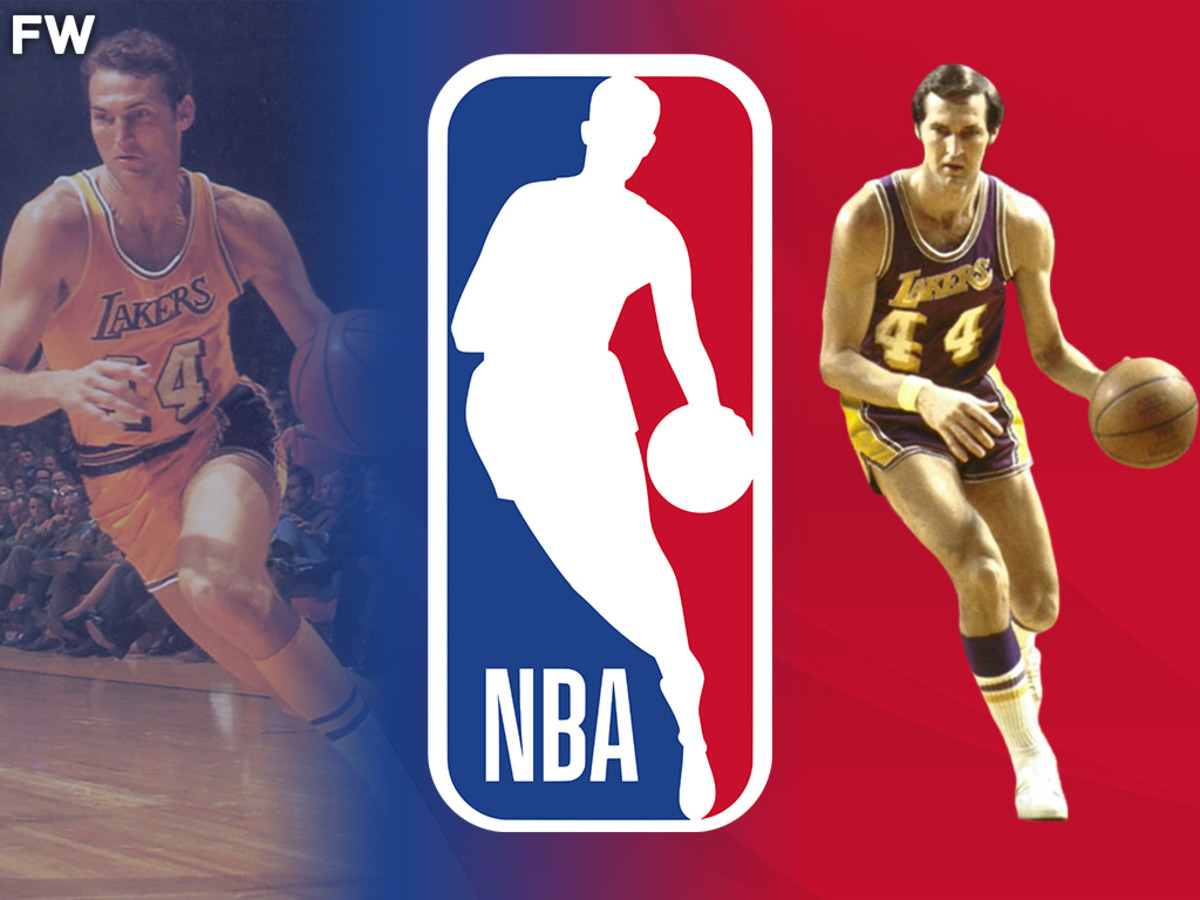
As a little boy, I had no aspirations of becoming a professional athlete.  I was short, overweight and had zero natural abilities.  But I had a basketball hoop attached to the backyard patio roofline where I shot 16-footers every day imagining I was Jerry West of the Los Angeles Lakers.

That’s why it was sad to hear the news that the NBA Hall of Famer had passed away at 86.

West along with Hall of Fame Dodger pitcher Sandy Koufax were my two biggest sports idols growing up.

Jerry West had a handful of nicknames including Mr. Clutch and The Logo.  The one I liked best was the lyrical Zeke from Cabin Creek making him seem mythical.

I respected his tenacity to want the ball every time he dribbled down the court, especially during playoff games.  In his 14-year career, he made almost have of his shots which is why I felt confident that whenever he had the ball in his hands the Lakers had a chance to win. 

He had his nose broken nine times.  Imagine having the courage to go through that and to continue playing at an intense level, unafraid of driving to the basket.

The one Achille’s heal was his inability to beat the Boston Celtics in the NBA Finals.  The Celtics beat the Lakers all six times they played each other with West on the team.  Even when the Lakers clearly had the superior team in 1969, something always happened which prevented the Lakers from claiming victory. 

Three of those contests went seven games:  only seven points separated the two teams in those deciding matches.

Laker fans felt the heartache of Jerry West who despite playoff heroics could not find a way to get the leprechaun off the Lakers’ backs.  In fact, he outplayed everyone in 1969 in points and assists, averaging 38 points per game making half of his shots, earning the MVP award, the only time a player on a losing team won it.  That did little to take away the sting from West’s psyche.

In his memoir, West described the depression he felt whenever the Lakers fell short of a title.  Even after his playing days were over and he became an award-winning basketball executive, West could not sit and watch his Lakers in playoff games.  He had to stand in a hallway away from the court, or drive around town in his car.  It’s funny that I used to do the same thing as a fan, unable to watch critical moments in a game, fearful that the Lakers would lose again.

Jerry finally won his one and only championship in 1972.  That team had the best record ever by an NBA team at the time of 69-13 which included a 33-game winning streak, the most consecutive wins by any team that still stands today.

When I was 13, I chronicled the streak by cutting out sports articles from the newspaper and taping them into a scrapbook.  

Earlier that same year, Sandy Koufax was voted into the Baseball Hall of Fame, a good year for my idols.

I was fortunate enough attend the game when the Lakers won that elusive NBA championship against the New York Knicks.

When tickets went on sale for the Finals, my sister Debra drove me to the Fabulous Forum in Inglewood.  After waiting in line for hours, we were able to get tickets for Game Five at the face value price of $15.  That wouldn’t even get you a beer at a game today.  Of course, we weren’t sure if there would be a Game Five at the time.

As it turned out, the Lakers were up three games to one when they returned home at LAX on May 6th to play for the championship at the Forum the next day. 

We were so excited that my sister drove us to LAX to see the players. For people younger than 50, what I’m about to tell you may seem shocking.  

Back then, professional athletes would de-plane at the same terminal as the general public and walk by themselves (no entourages) towards the carousel baggage claim area.  Security was scarce so my sister and I stood back watching the players wait around for their bags.  That was a perfect opportunity for me to ask for their autographs.

And then there he was, number 44, Jerry West, 20 yards away from me—and I froze.  I was too nervous to approach him for an autograph.

Instead, I settled for two of the five starters, starting forwards Happy Hairston and Jim McMillian, and back-up center Leroy Ellis.  I even got Hall of Fame announcer Chick Hearn’s signature as well.

When my brother, sister and I went to the game the next day.  Based on past experiences, we had no confidence that they could finally win a championship, but they did, beating the Knicks 114-100.  It was the only time I was at a sporting event that resulted in my team winning a trophy.

I feel fortunate that both of my boyhood sports heroes have lived long lives (Koufax will turn 89 later this year).  Though I never shook their hands or got autographs, it has been a warm feeling knowing that they were still around for most of my life.

A page from my scrapbook chronicling the 1971-72 Lakers.